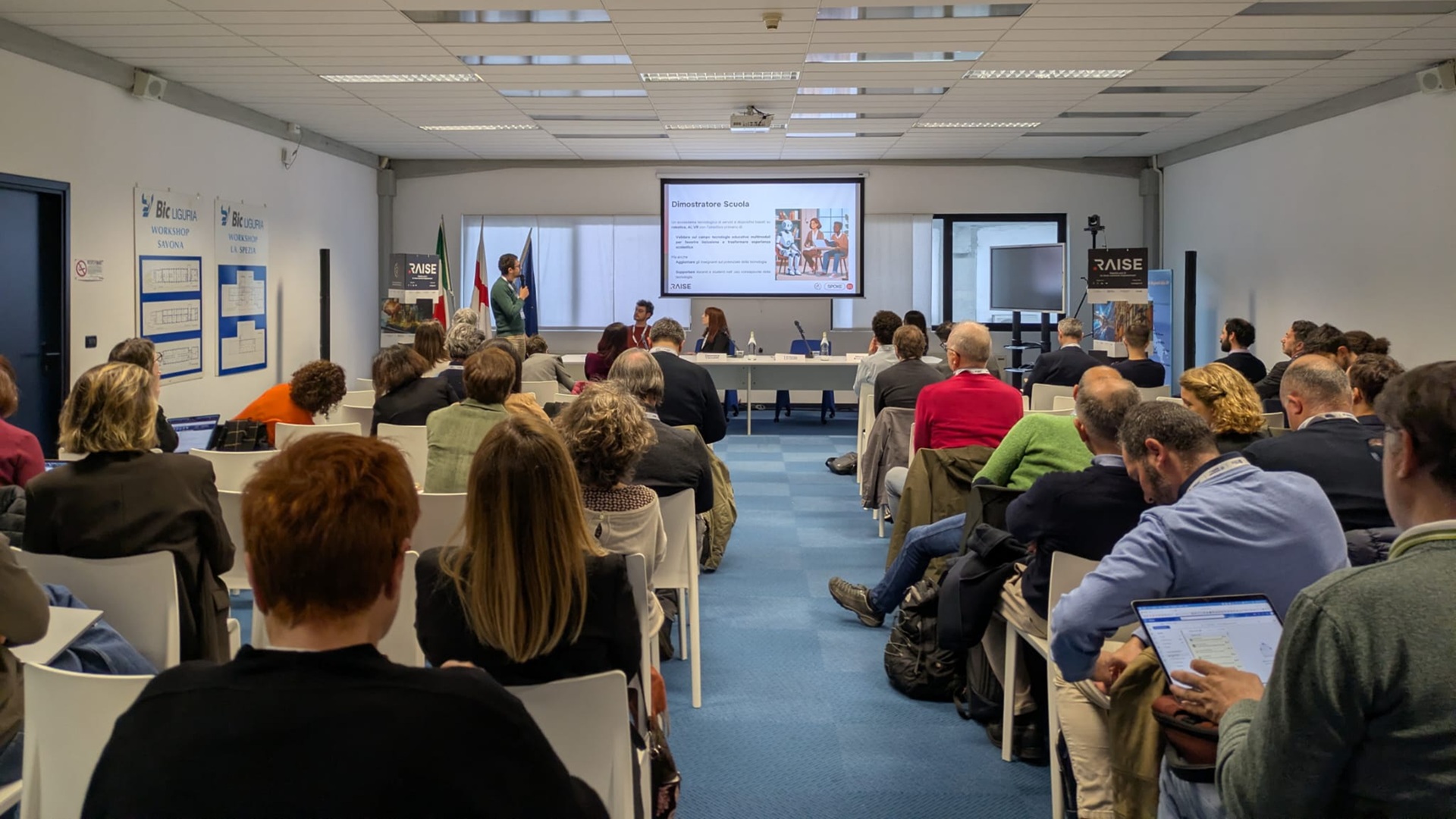
On 12 March 2026, the BIC Genova hosted the first of the final events organized for RAISE Spoke 1 – Urban Technologies for Inclusive Engagement, a day dedicated to sharing the results, experiments, and perspectives that have emerged over the past three years of activity.
The initiative, organized in collaboration with FILSE, brought together researchers, companies, institutions, and regional stakeholders to reflect on the social and economic value of the technologies developed within the Spoke focused on inclusive cities.
The event opened with institutional greetings from Gerolamo Taccogna, President of FILSE, Cristina Battaglia, Programme Manager of the RAISE ecosystem, and Alessio Piana, Regional Councillor for Economic Development, Research and Innovation of the Liguria Region. Their remarks highlighted the strategic importance of collaboration between research institutions, public bodies, and the productive system in transforming scientific and technological innovation into concrete opportunities for territorial development.
The path of RAISE Spoke 1 was retraced by Michela Spagnuolo, Leader of Spoke 1 and Director of the IMATI Institute of the National Research Council (CNR). She outlined the main milestones of the project: from the initial conception of the ecosystem in 2021, to its operational launch in 2022, and the development of research and experimentation activities starting in 2023.
Among the most significant moments were the launch of the cascade calls, the RAISE up Pitch Day in 2025, and the field experiments that in the same year led Spoke 1 to receive the Smart Cities Award, a recognition dedicated to projects capable of contributing to the development of more innovative and inclusive cities.
Accessibility and inclusion have been the key themes throughout the entire journey. Spoke 1 has worked to envision a city capable of adapting to the people who inhabit it, leveraging existing technologies—such as sensors, digital platforms, and artificial intelligence systems—to make urban spaces more accessible and responsive to individual needs.
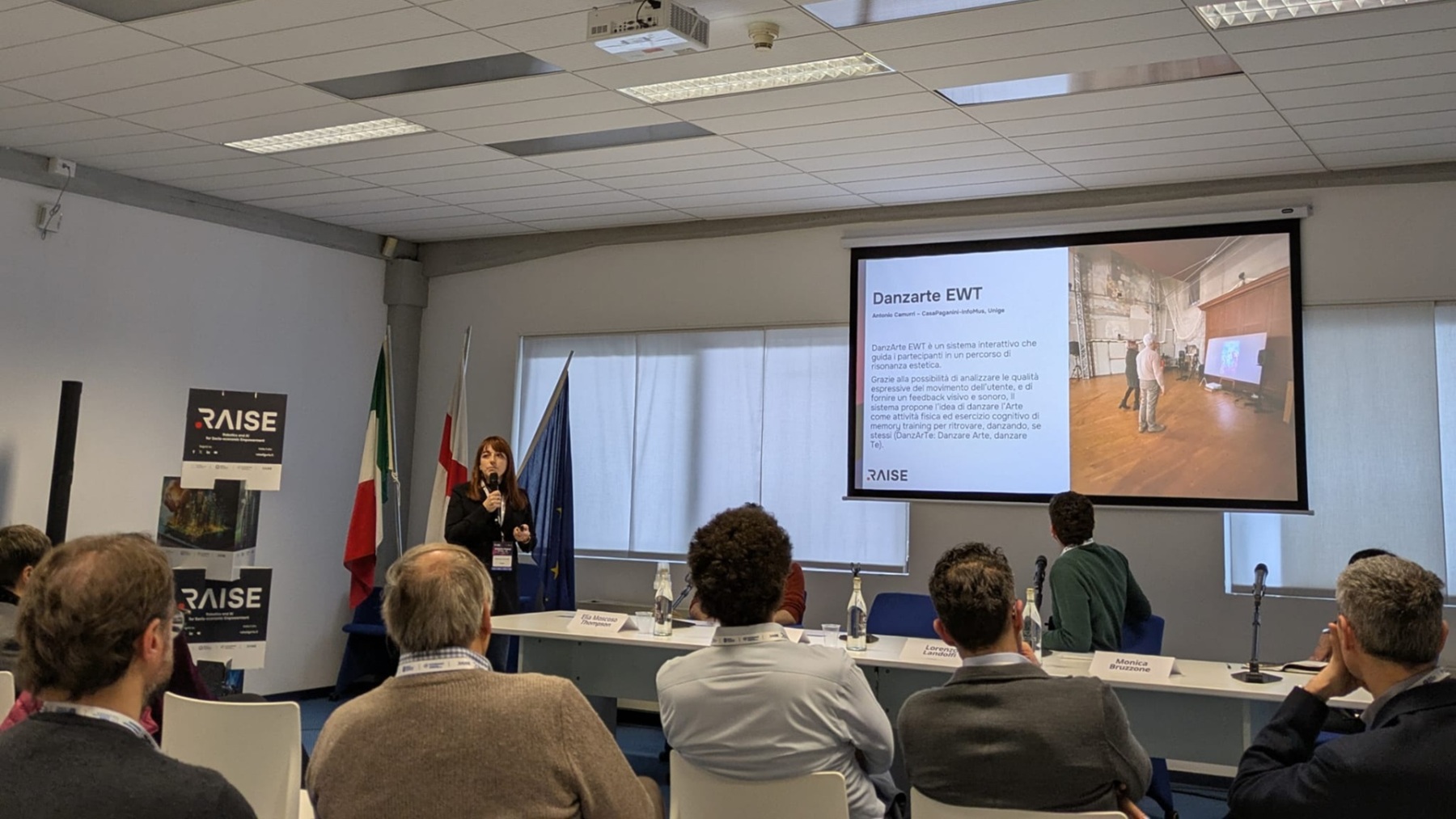
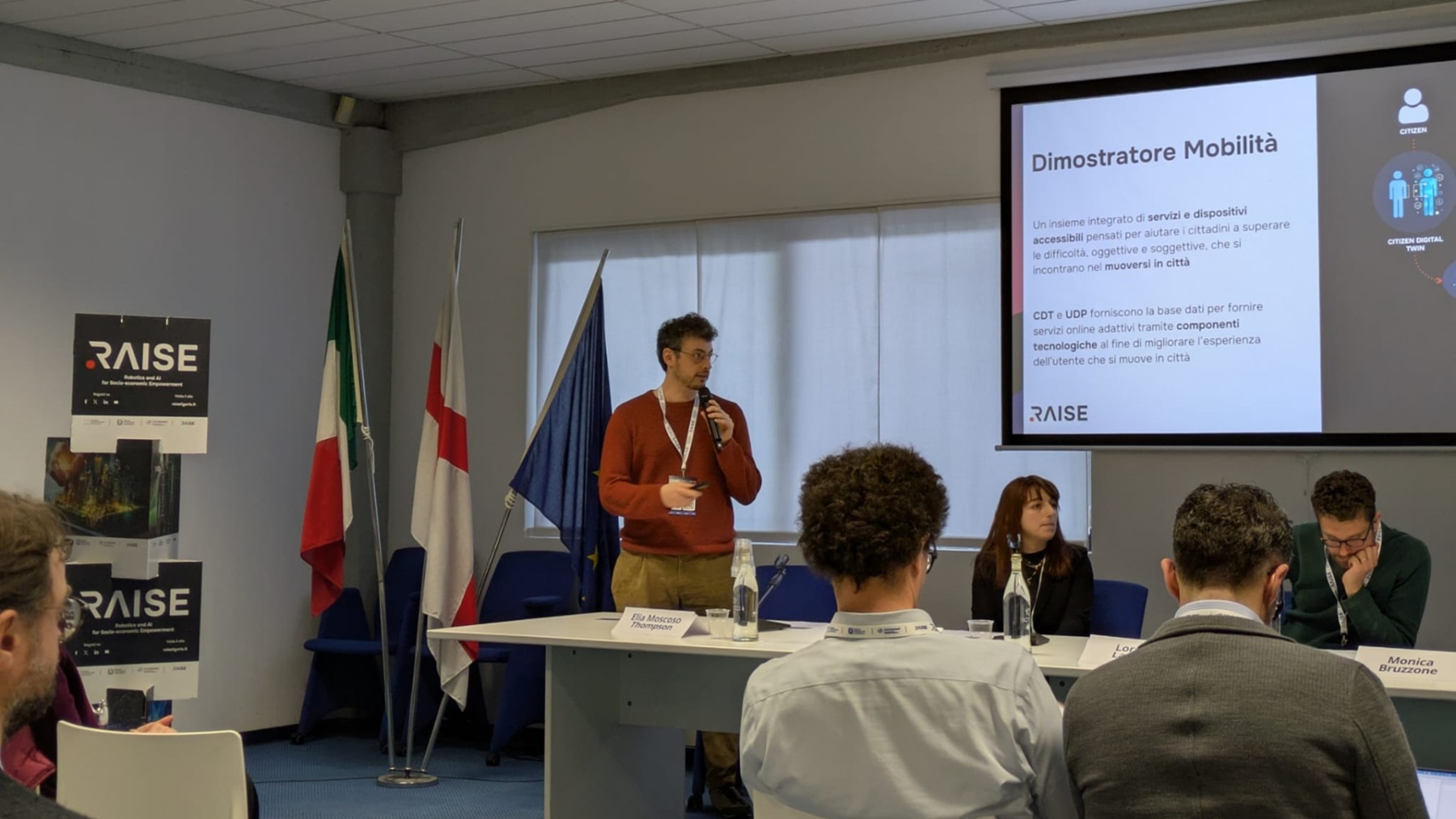
The session “From Labs to Market” presented research results through contributions from Elia Moscoso Thompson of the CNR, Lorenzo Landolfi of the Italian Institute of Technology, and Eleonora Ceccaldi and Monica Bruzzone from the University of Genoa. Their presentations illustrated the main technological development lines of Spoke 1 and the role of the demonstrators—ecosystems of technologies composed of sensors, devices, and software integrated with one another and with the digital infrastructure of RAISE.
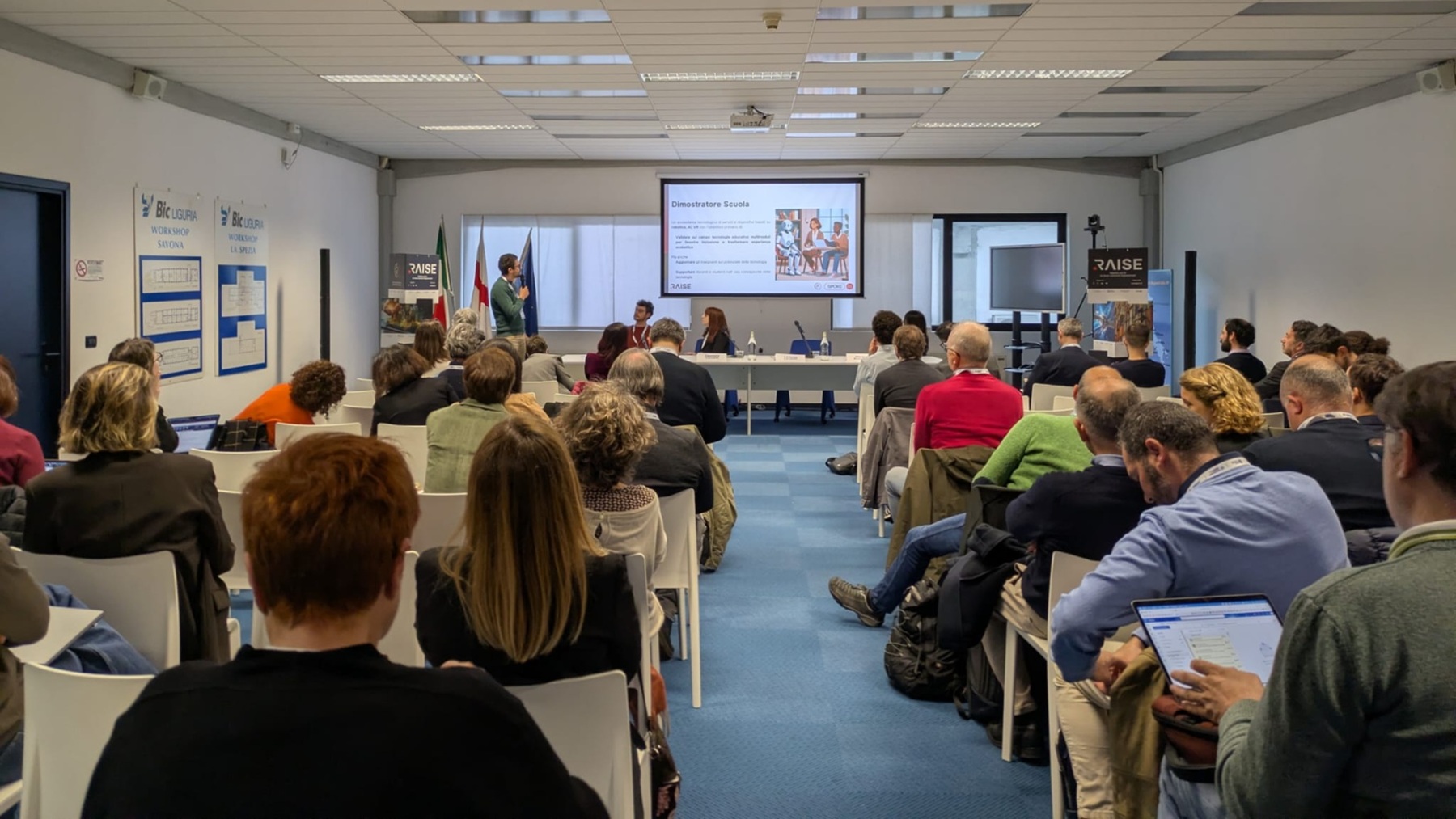
These demonstrators address concrete contexts of urban life. The Mobility demonstrator develops tools to facilitate movement within the city, with particular attention to pedestrian mobility and the accessibility of public spaces. The School demonstrator experiments with technologies aimed at improving learning environments, promoting inclusion and well-being within educational spaces. The Culture demonstrator explores new ways of engaging with cultural heritage through immersive and multisensory experiences that involve the body, emotions, and perception.
A central aspect also concerns the relationship with public administrations. The Work Package “From Inclusive Technologies to Inclusive Smart Cities” has developed digital tools and guidelines to interpret and integrate complex urban data, providing public decision-makers with instruments to support more informed policies. From this perspective, the city emerges as a system composed of micro-territories characterized by different levels of economic, social, and environmental vulnerability. Data analysis makes it possible to identify these differences and allocate resources and interventions more effectively.
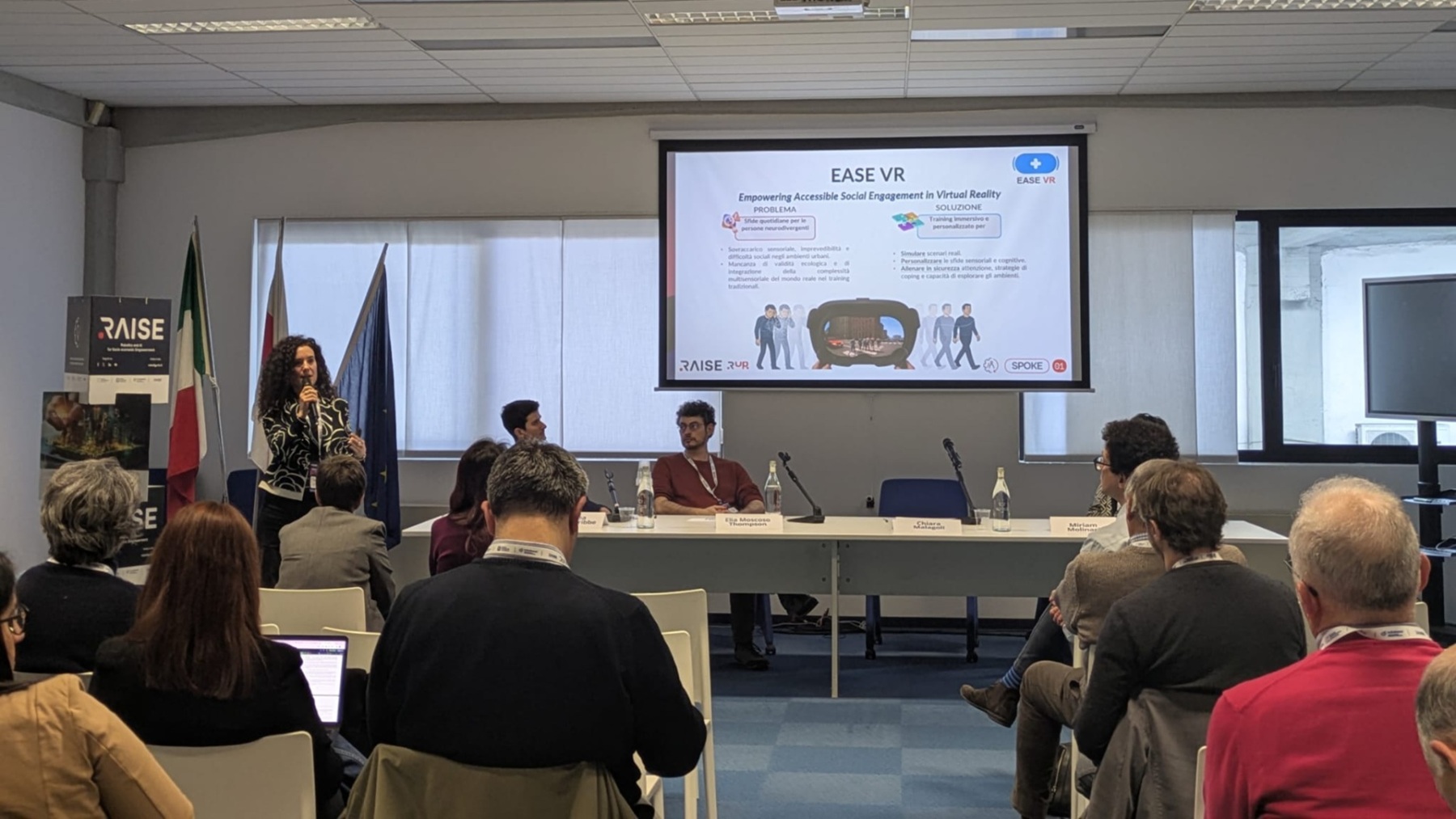
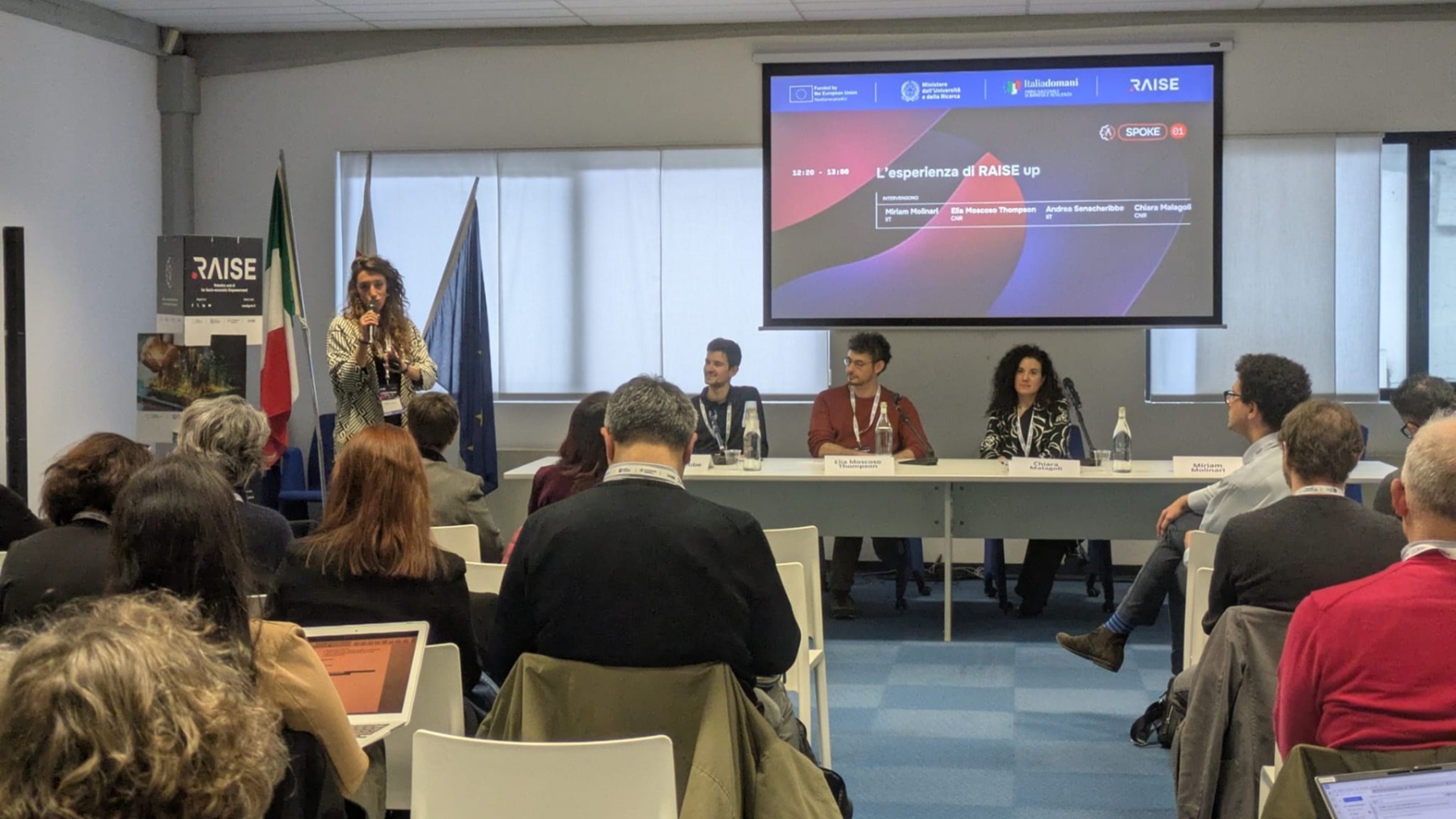
The session dedicated to the RAISE up experience gave voice to some of the initiatives selected for the startup program, as introduced by Miriam Molinari. This was followed by presentations from Andrea Senacheribbe, Chiara Malagoli, and Elia Moscoso Thompson, who illustrated the initiatives LUCA, Urban3D, and EaseVR respectively. These projects demonstrate the potential of the technologies developed within Spoke 1 to foster new applications and opportunities for technology transfer.
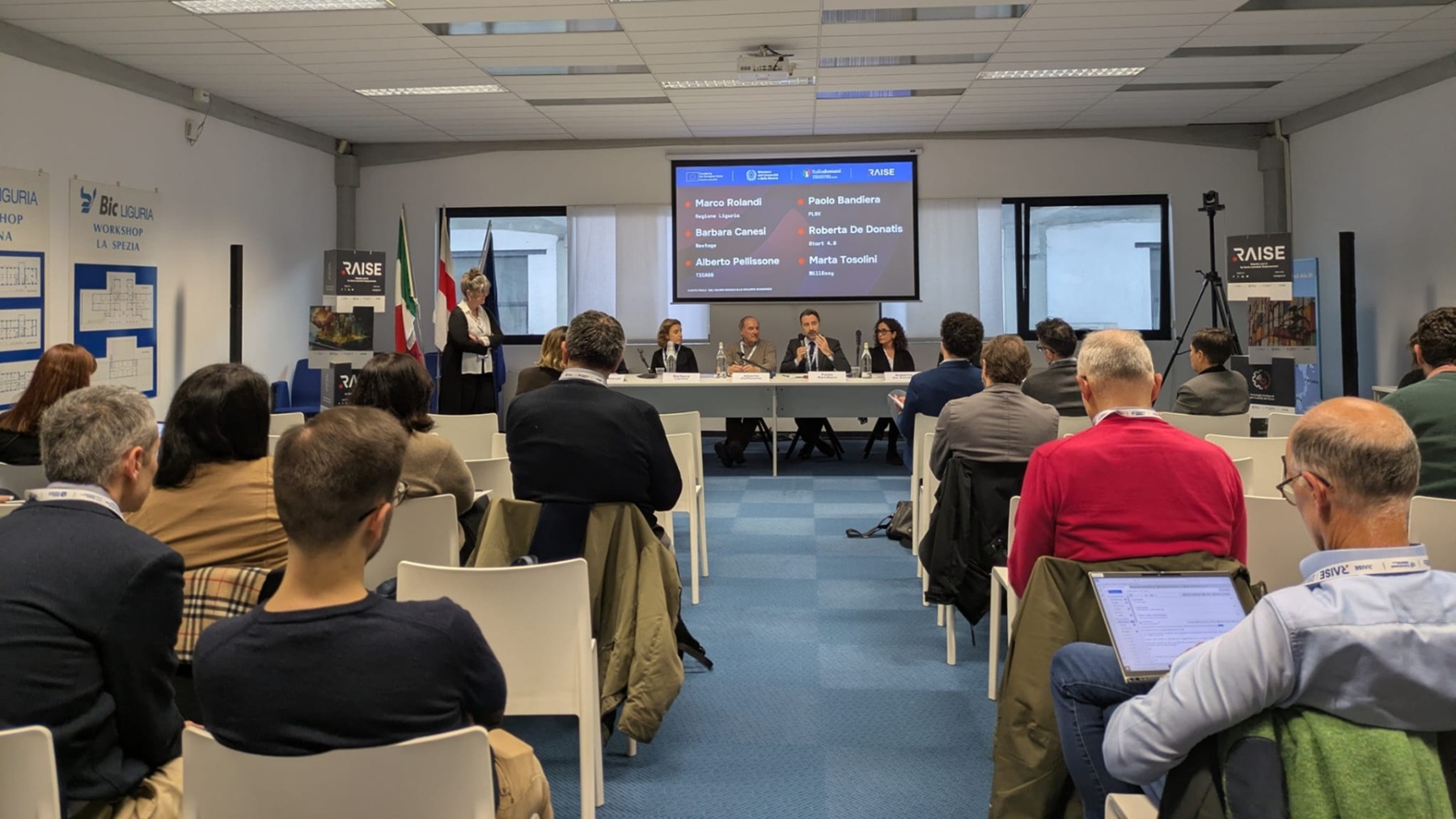
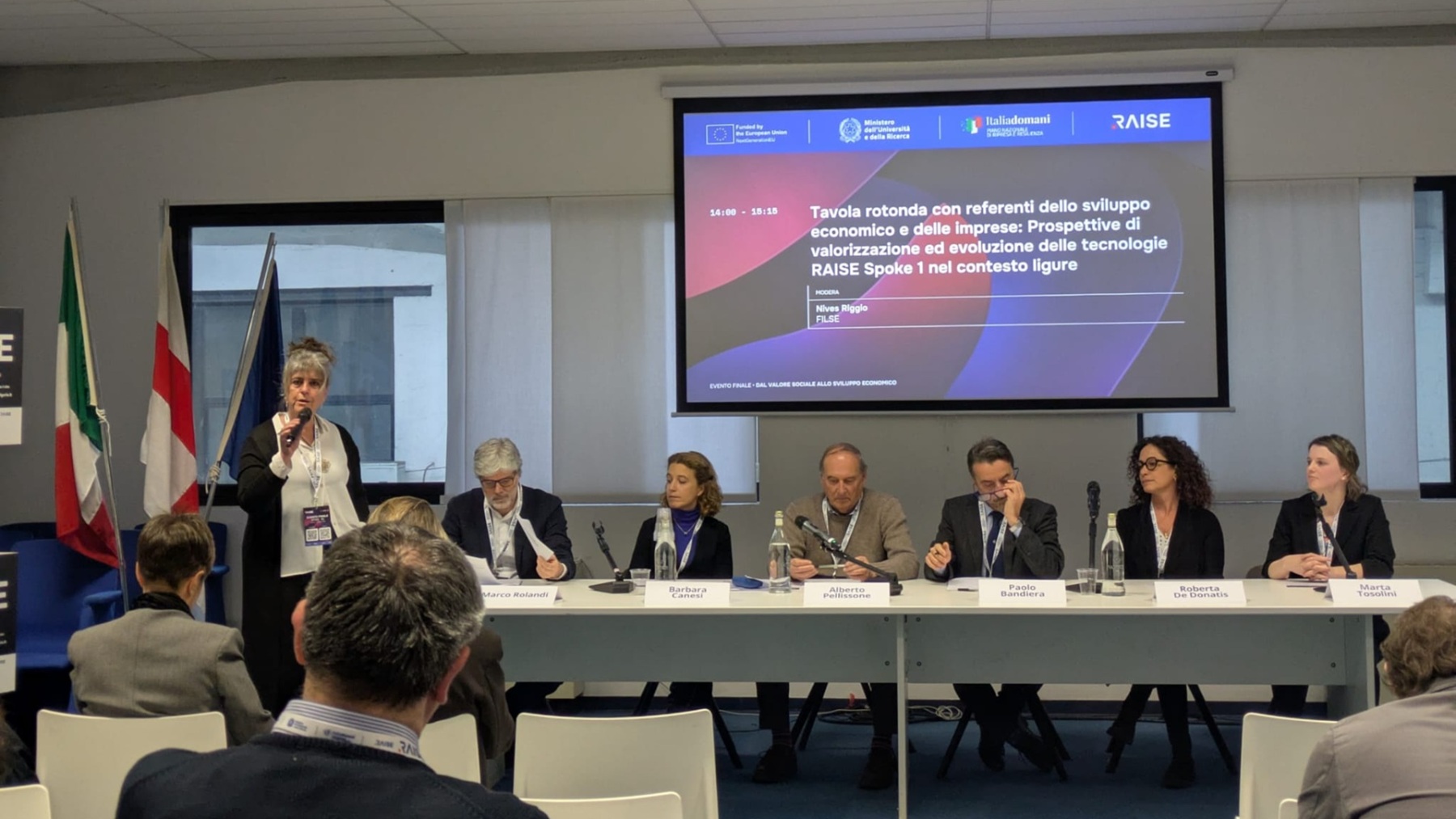
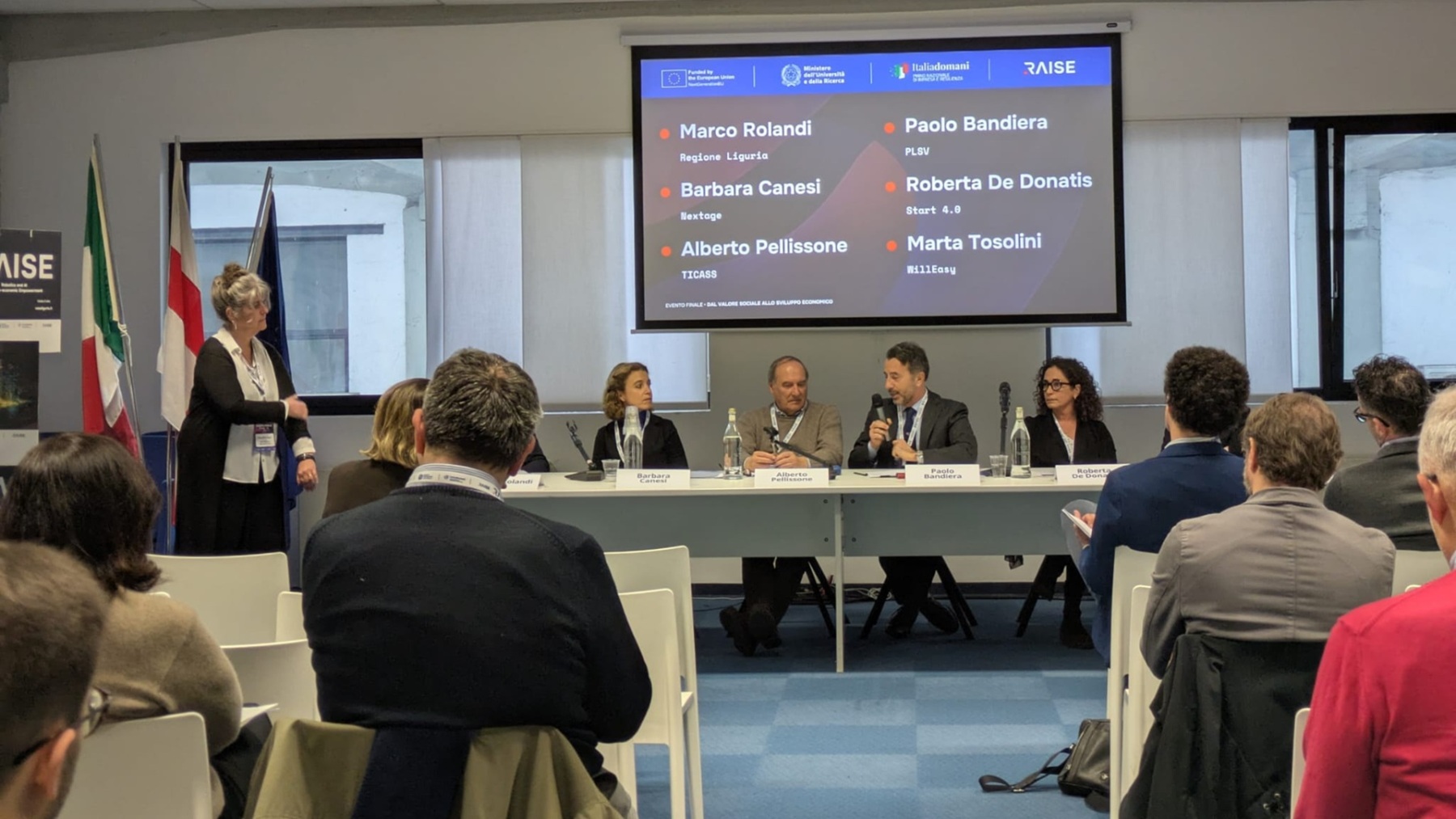
In the afternoon, the roundtable discussion on economic development brought together representatives from institutions and technological clusters to discuss the prospects for enhancing the value of the developed technologies. Moderated by Nives Riggio from FILSE, the discussion involved Marco Rolandi from the Liguria Region, Barbara Canesi from Nextage, Alberto Pellissone from TICASS, Paolo Bandiera from PLSV, Roberta De Donatis from Start4.0, and Marta Tosolini from WillEasy. The discussion highlighted the potential of RAISE technologies to generate new opportunities for businesses, urban services, and public policies.
The final session explored the technological legacy of Spoke 1 in the region. Moderated by Michela Spagnuolo, it featured contributions from Massimo Massa of Aitek, Fabrizio Malfanti, Riccardo De Benedictis, and Giuseppe Patanè of the CNR. The speakers presented the digital infrastructures developed by the project—including the UDP platform and the City Digital Twin—as well as research infrastructures related to the One Health paradigm, which connects well-being, health, and the urban environment.
The concluding event thus conveyed the deeper meaning of three years of work. “More than a final event, we could speak of the beginning of a new phase for the initiatives promoted by RAISE Spoke 1,” commented Michela Spagnuolo. “The technologies developed within Spoke 1 now represent a heritage of knowledge, infrastructures, and collaborations that will continue to grow across the Ligurian territory, opening new perspectives for innovation, economic development, and social inclusion.” The event ultimately demonstrated how scientific research can generate concrete tools to improve quality of life in cities.