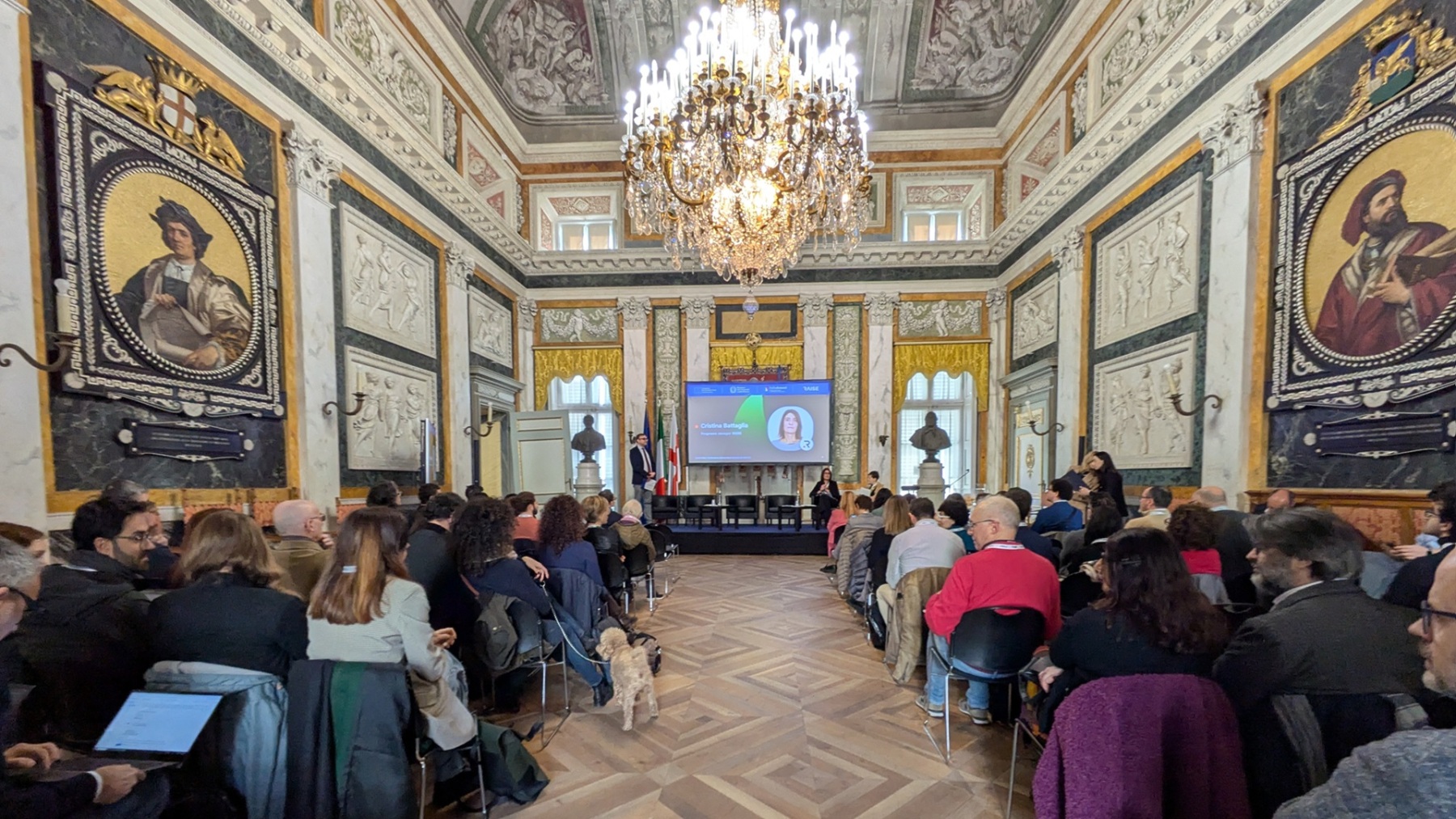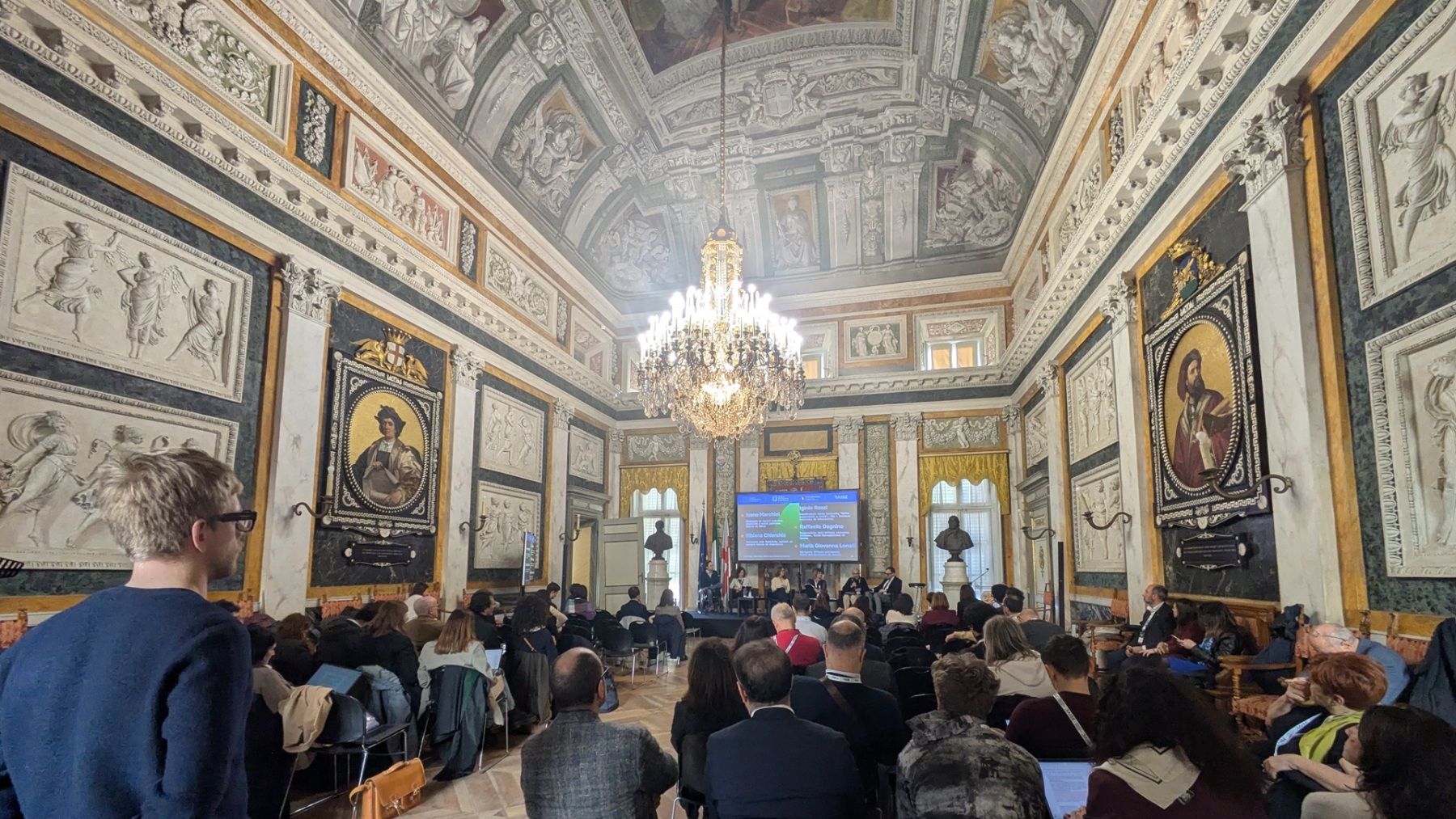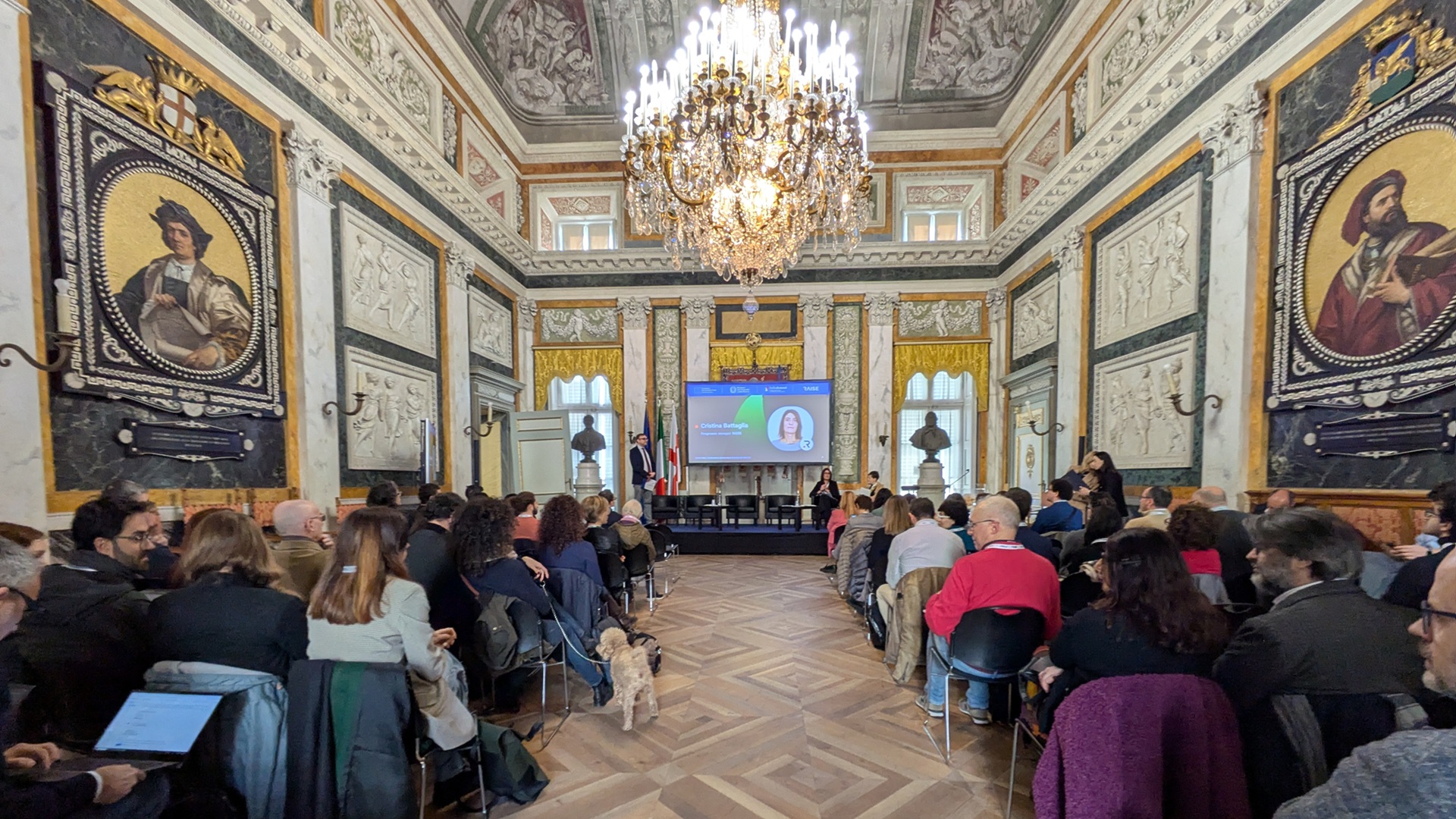
On 13 March 2026, Palazzo Tursi in Genoa hosted a day of discussion dedicated to the future of cities and the role of urban technologies in fostering more inclusive communities.
The initiative, promoted within the framework of RAISE Spoke 1, brought together public administrators, researchers, urban planning experts, and innovation specialists to discuss the results, perspectives, and impact of the activities carried out over the past three years.
The day opened with the session “The Ethical City, the City that Cares,” moderated by Domenico Lanzillotta (Blum/City Vision). During the meeting, Michela Spagnuolo, Spoke Leader of RAISE Spoke 1 and Director of the Institute for Applied Mathematics and Information Technologies (IMATI) of the National Research Council (CNR), presented the objectives and key results of the spoke, which focuses on developing urban technologies to promote participation, inclusion, and quality of life in cities.
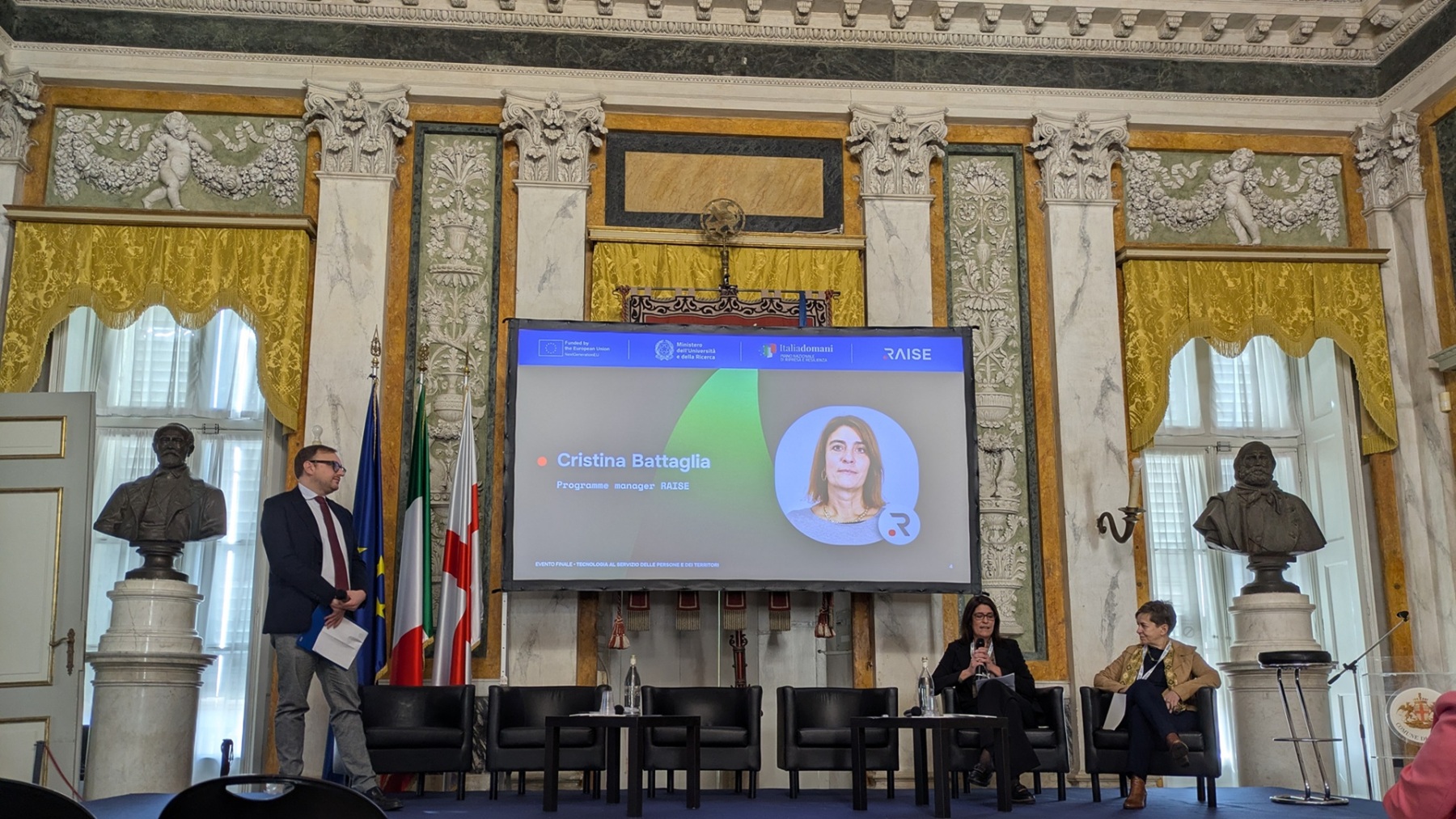
In her speech, Cristina Battaglia, the project’s programme manager, offered an overview of the three years of work carried out by the RAISE ecosystem: an initiative that has involved more than one thousand researchers and professionals and has led to the recruitment of 380 people, with women representing 42% of the total. Battaglia highlighted the value of multidisciplinarity and the commitment to placing technology and innovation at the service of people, with results capable of generating both economic and social value.
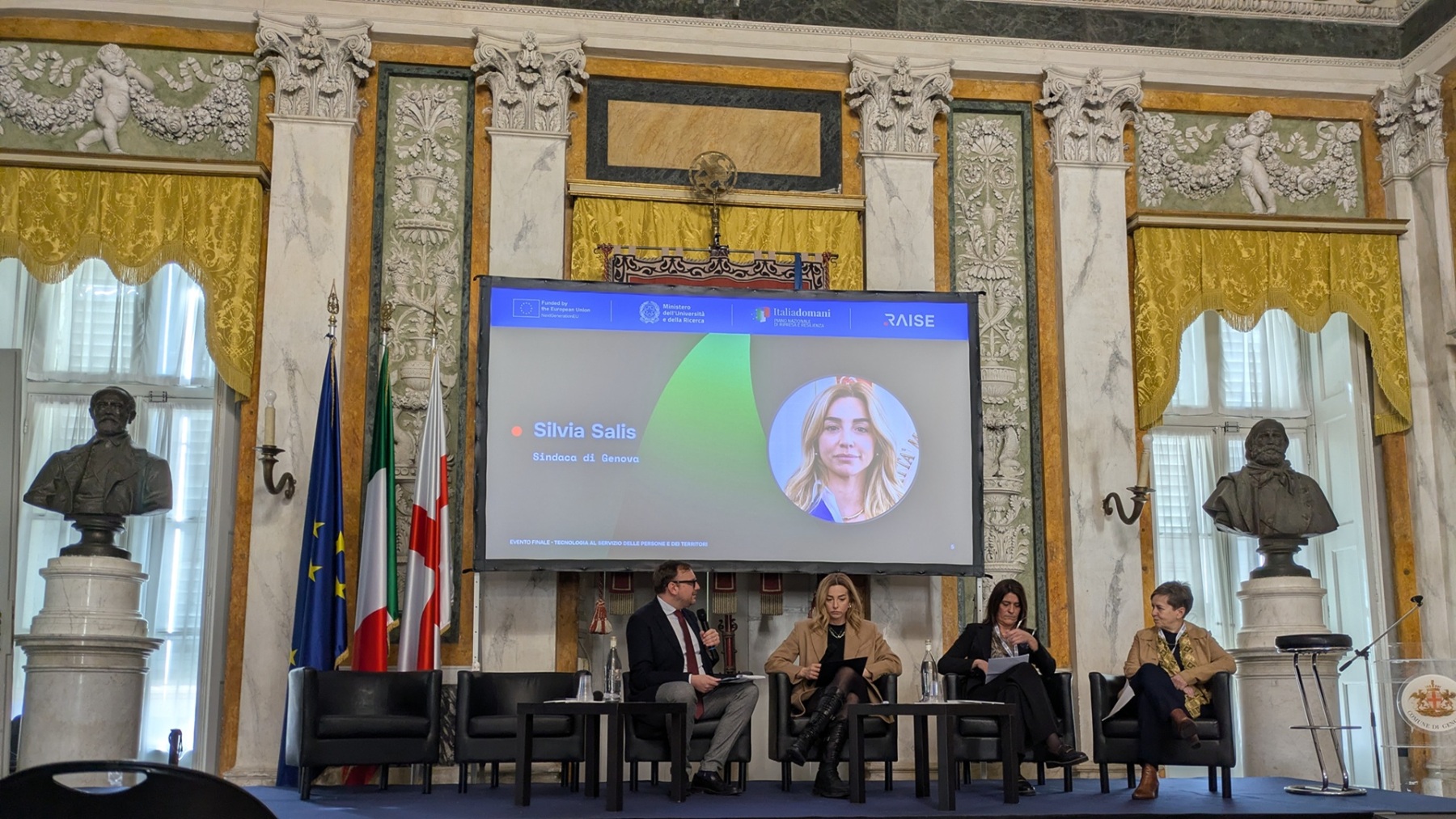
The Mayor of Genoa, Silvia Salis, emphasized the strategic role of scientific and technological research in the present and future of the city. Genoa is developing a strong identity as a center of innovation, where robotics and artificial intelligence engage with issues such as urban justice and democratic access to technology. The digitalization of public services also requires the growth of digital skills among the population, with particular attention to more vulnerable groups.
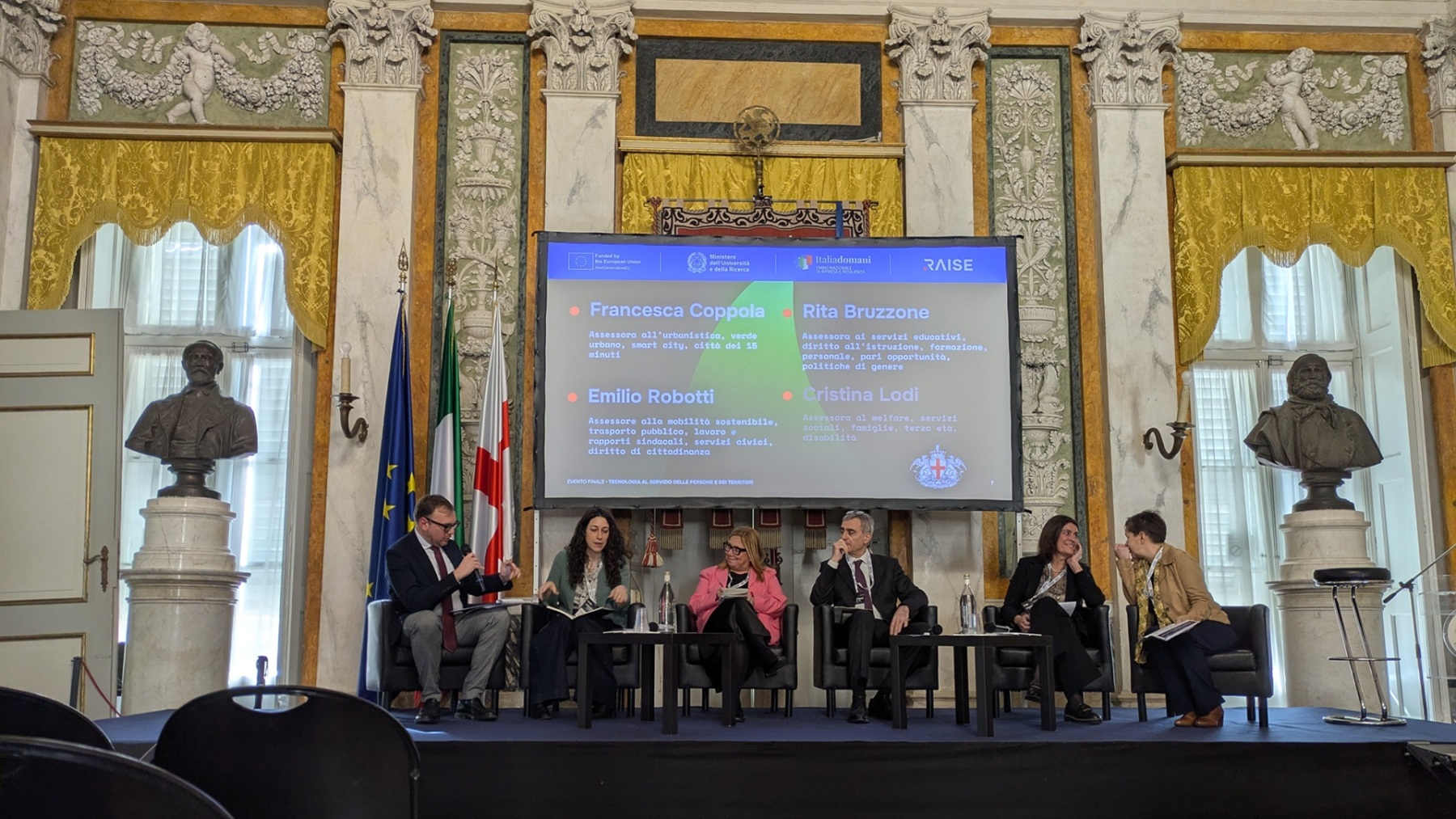
City councillors of the Municipality of Genoa – Francesca Coppola, Rita Bruzzone, and Emilio Robotti – linked the RAISE experiments to the city’s urban policies, including the “15-minute city” model and the goal of building urban spaces that are more accessible, inclusive, and attentive to quality of life.
The second session, moderated by Michela Spagnuolo, explored the approach, results, and impact of the research activities in greater depth. Speakers included Carlos Beltran and Lorenzo Landolfi from the Italian Institute of Technology, Katia Lupinetti, Elia Moscoso Thompson, and Elena Maria Ragazzi from the National Research Council, as well as Paola Renata Dameri and Mauro Migliavacca from the University of Genoa.
Beltran and Lupinetti illustrated the role of living labs, experimental environments that involve citizens and users in the co-design of technologies. These laboratories take different forms: testing experiences with technologies that are already available, co-design activities aimed at identifying emerging needs, and processes supporting implementation and adoption.
Among the demonstrators developed within RAISE, Elia Moscoso Thompson presented the mobility demonstrator, designed as a social infrastructure capable of connecting citizens, urban services, and communities. Lorenzo Landolfi, on the other hand, presented the demonstrator dedicated to the school environment.
Paola Renata Dameri addressed the theme of technologies for urban governance and their contribution to improving quality of life in cities, while Elena Maria Ragazzi explained the evaluation model adopted within RAISE. The evaluation distinguishes between outputs, which measure the functioning of the demonstrators, and outcomes, which analyze their impact on well-being and inclusion. The process involved users and stakeholders through focus groups and analytical tools such as the SWOT matrix, with the aim of developing technologies that are accessible and not elitist.
Mauro Migliavacca finally presented the results of a survey conducted among approximately two thousand citizens in Liguria, focusing on digital skills and access to the internet. The study provides a useful knowledge tool for understanding differences related to age, income, and employment status, and represents a valuable information resource for both the city and the region.
In the afternoon, Monica Gori of the Italian Institute of Technology delivered a greeting via remote connection, followed by a presentation by Roberta De Donatis of the National Research Council on the cascade funding calls, instruments designed to expand the ecosystem’s impact and involve new organizations in innovation processes.
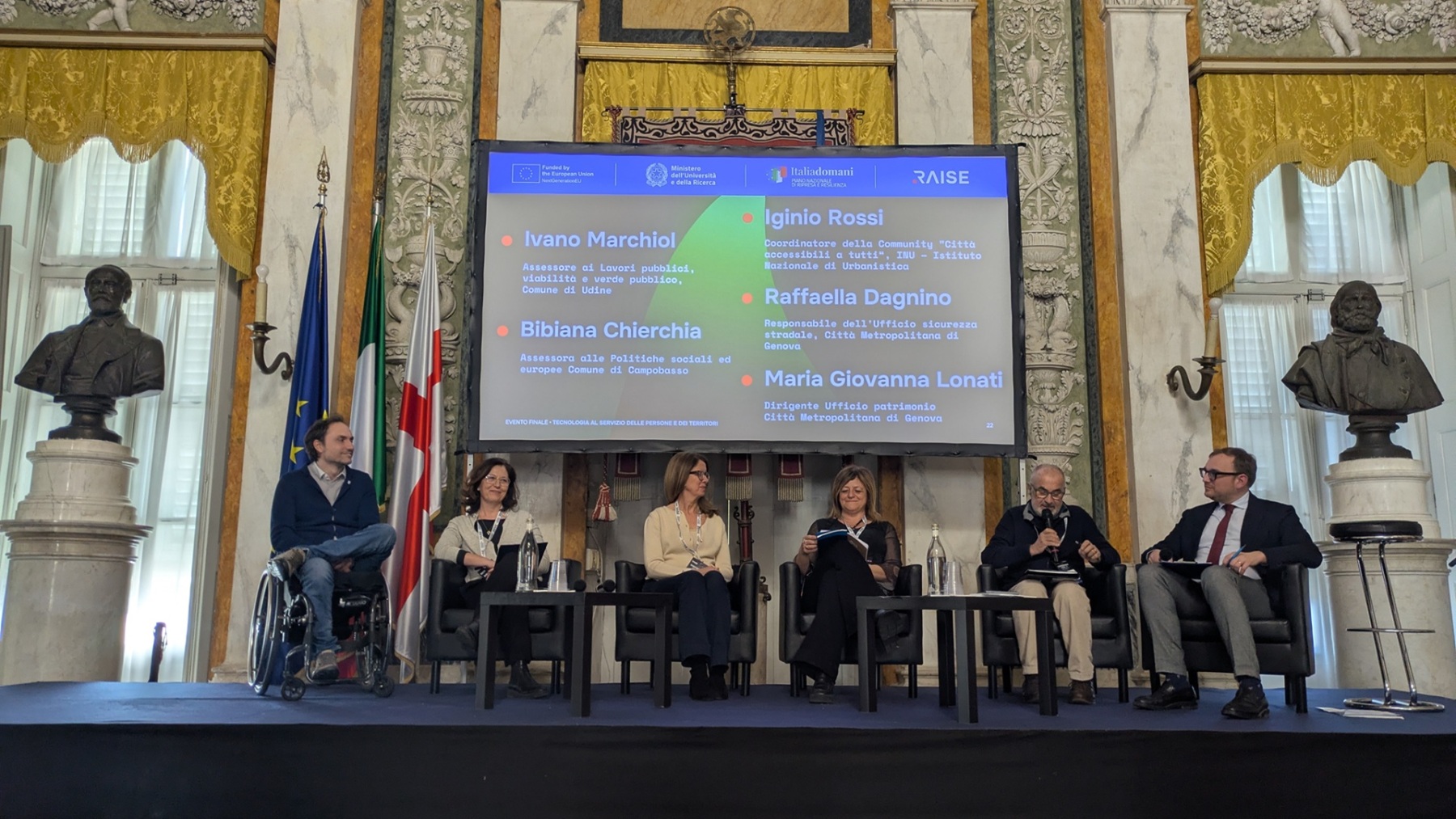
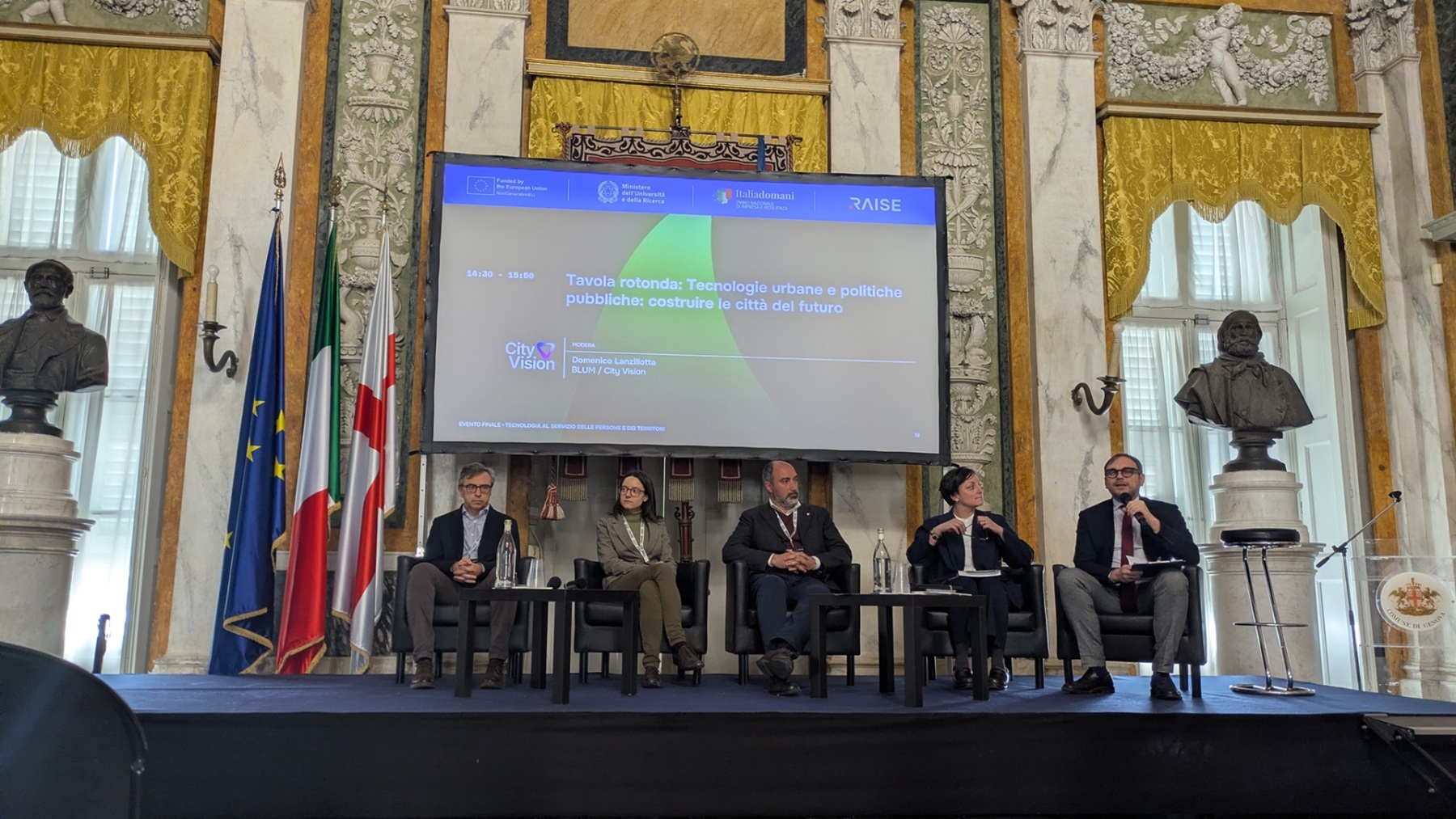
The day concluded with the roundtable “Urban Technologies and Public Policies: Building the Cities of the Future,” moderated by Domenico Lanzillotta. The discussion involved Nora Alba Bruzzone (Urban Planning Directorate of the Municipality of Genoa), Nicola Valentino Canessa (Genova Smart City), Enrico Buzzo (AMT Genova), Iginio Rossi (National Institute of Urban Planning), Ivano Marchiol (Municipality of Udine), Bibiana Chierchia (Municipality of Campobasso), Silvia Campailla (CTE Genova), and Raffaella Dagnino (Metropolitan City of Genoa).
The speakers highlighted several key challenges for contemporary cities: the integration of data and decision-making processes, the development of shared digital infrastructures, and the role of networks connecting institutions, companies, and research centers.
The discussion also emphasized the importance of a multidisciplinary approach to urban transformation and the need to develop technologies capable of producing concrete effects on people’s everyday lives—from mobility to public services, from accessibility of urban spaces to civic participation.
The day thus offered a rich overview of experiences and perspectives, confirming the contribution of RAISE in promoting a vision of the city in which technological innovation, public governance, and social participation work together to build new models of urban well-being.