
Urban technologies and inclusion: episode two of the RAISE video-podcast now online


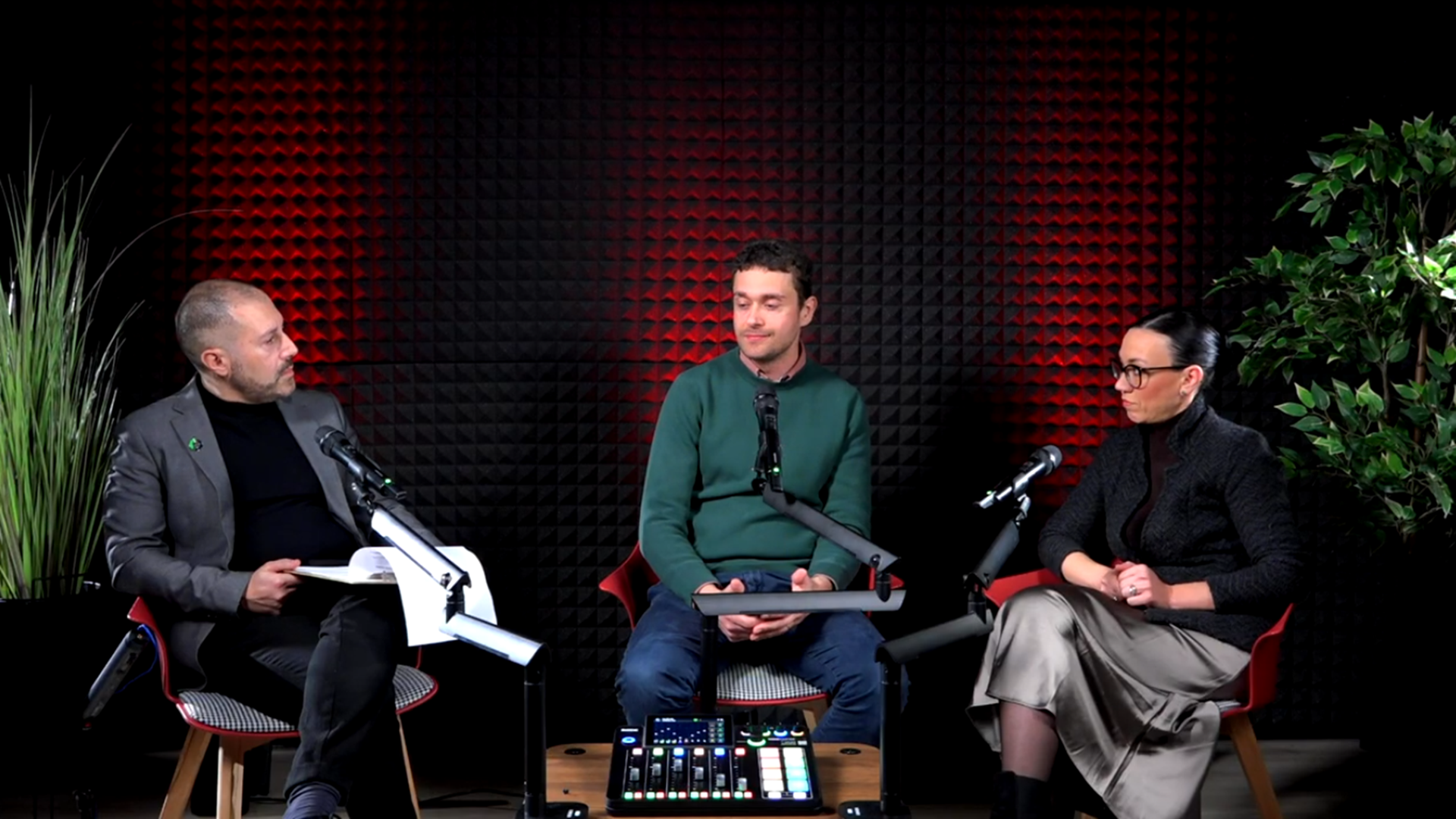
The second episode of Encounters with the “Incontri con il futuro – Storie di innovazione dall’ecosistema RAISE”, the video-podcast created in collaboration with Rinnovabili.it, is now available. The series explores projects, people, and visions at the forefront of research in robotics and artificial intelligence.
This episode has focused on a key theme for the development of contemporary cities: inclusion. Through a conversation with Lorenzo Landolfi, Postdoctoral Researcher at the Italian Institute of Technology, and Katia Lupinetti, Research Scientist at the National Research Council, the episode has offered a concrete perspective on how urban technologies can improve quality of life and foster broader participation in educational and urban environments.
The discussion has explored in particular two application areas developed within Spoke 1 of the RAISE ecosystem: the School Demonstrator and the Mobility Demonstrator. These complementary examples have shown how research can translate into solutions capable of addressing real-world needs.
The School Demonstrator has presented an integrated set of technologies based on robotics, artificial intelligence, and multisensory approaches.
During the episode, Lorenzo Landolfi has explained how these tools have supported new learning models designed to adapt to the diverse needs of students. The integration of digital and physical environments has enabled more accessible learning experiences, encouraging active participation and valuing individual differences. The demonstrator has outlined a vision of education in which technology supports learning pathways and contributes to more inclusive environments.
Alongside education, the episode has addressed the topic of urban mobility. Katia Lupinetti has described the work behind the Mobility Demonstrator, which has used urban data and digital models to analyze and improve accessibility within city spaces. The processing of information from multiple sources has made it possible to identify critical issues and opportunities, providing useful tools to design services that better respond to people’s needs. The demonstrator has highlighted how a conscious use of data can support more effective decision-making and guide the transformation of cities toward greater inclusion.
Throughout the episode, the dialogue between the two guests has emphasized the value of collaboration across research institutions and disciplines. The RAISE ecosystem has created a shared working environment where technological, scientific, and social expertise has converged to develop innovative solutions. This approach has strengthened the connection between research and real-world applications, enabling a tangible impact on local communities.
The second episode of the videopodcast has offered a clear and accessible narrative of how technology can contribute to building more inclusive cities, starting from education and extending to urban spaces. It invites audiences to look at the present with a future-oriented perspective, where innovation and social responsibility move forward together.


