
Immersive technologies to engage the RAISE community and audience with research results


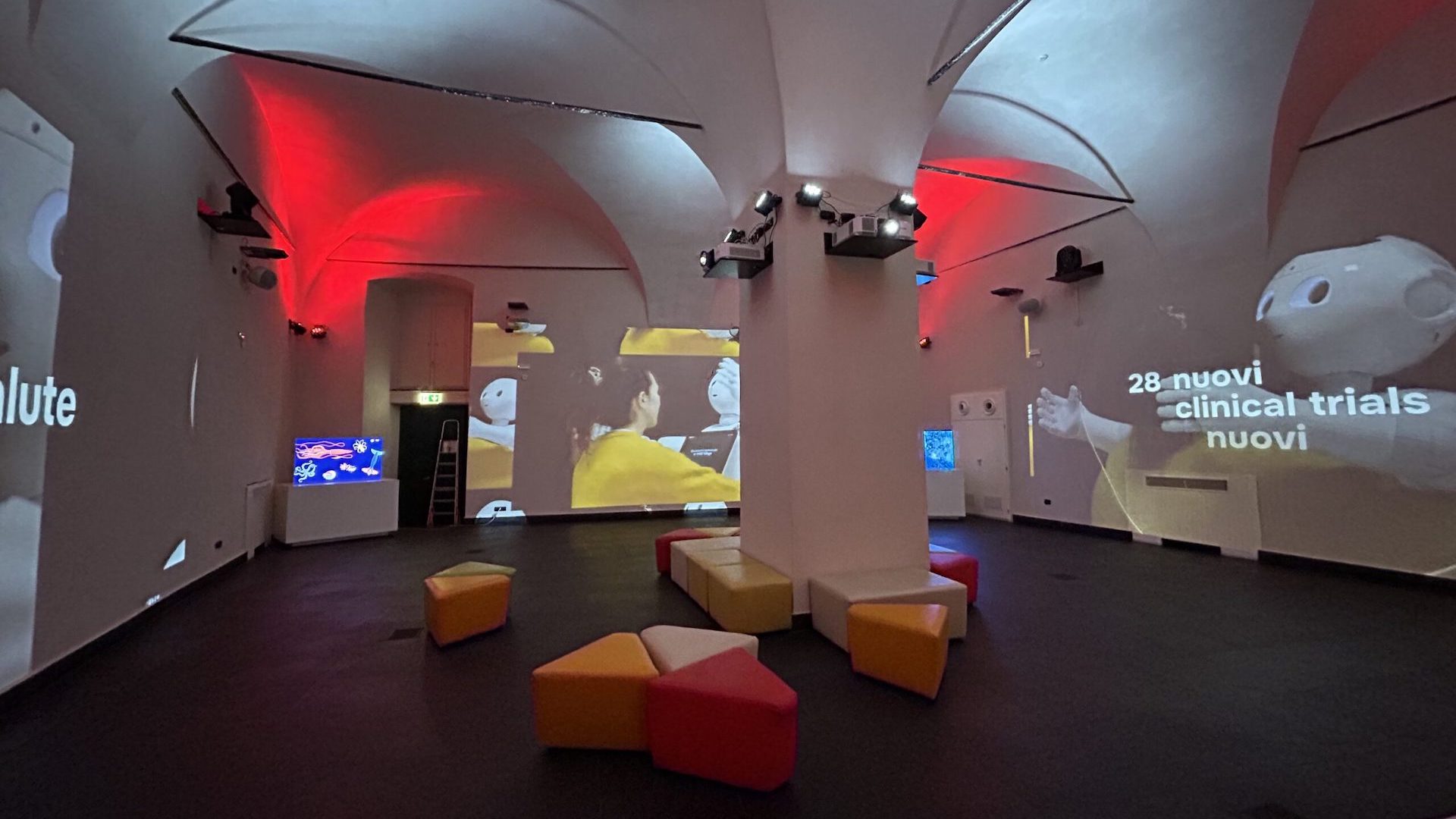
Immersive technologies today represent a strategic tool for engaging the public and project stakeholders in the enhancement and dissemination of research results. Immersion is a defining quality of certain cultural and exhibition experiences and can be described as the combination of multiple elements.
While interactivity may be present to varying degrees, what cannot be missing are a compelling narrative – capable of capturing and transporting visitors into a story (transportation into a narrative) – and multimedia design developed with strong directing and design expertise, able to generate a sense of embodiment, that is, multisensory engagement.
Within the framework of RAISE Spoke 5, CNR-IAS and ETT (a creative digital industry company within Dedagroup and project partner) developed several immersive environments aimed at science communication.
The main challenge was to build stories capable of presenting the results of an innovation ecosystem through engaging, multimedia narratives projected onto one, three, or four walls.
Within this context, three installations were created: RAISE Cube, EXPOsing RAISE, and RAISE More than Human.
The chosen communication approach entrusted the storytelling to one of the protagonists of the RAISE ecosystem – the humanoid robot – and highlighted 3D and 4D models, which serve as tools for scientific understanding and representation while also possessing their own aesthetic quality.
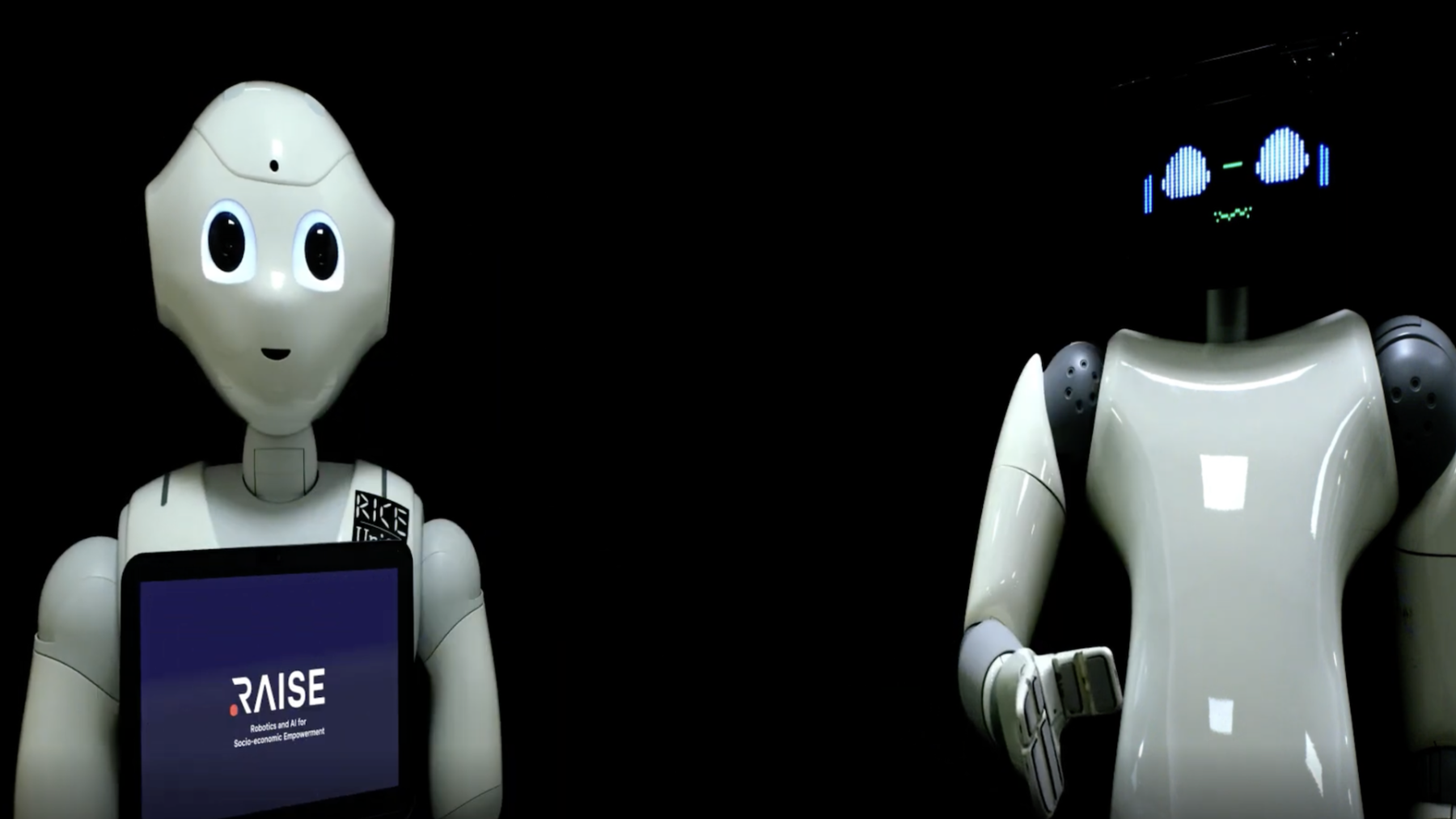
The project’s focus on robotics and artificial intelligence is thus presented from the perspective of two social robots and the researchers who design and program them.
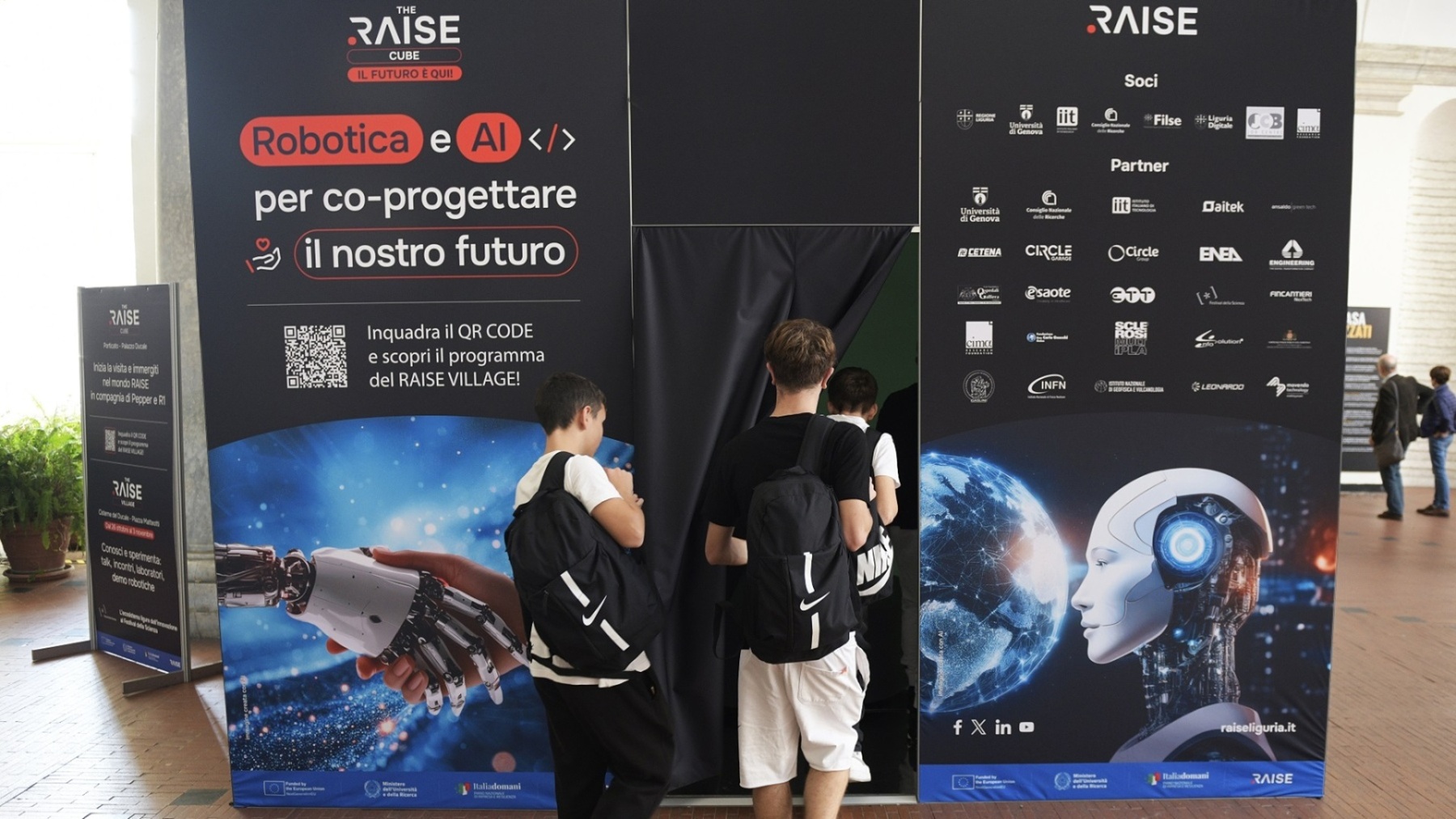
From the very first installation, the RAISE Cube, set up under the arcades of Palazzo Ducale, the robots Pepper and R1 introduced visitors – especially young people and families – to the project’s main results through photos, videos, and 3D models. Graphics and keywords also played a central role, acting as a visual and conceptual thread throughout the narrative.
Pepper and R1 – symbolically representing, respectively, a Japanese robot and a Made in Italy robot – later became ambassadors of RAISE at Expo 2025 Osaka with EXPOsing RAISE, a narrative adapted to a single screen to meet the exhibition and visitor flow requirements of the Italy Pavilion.
The latest project, RAISE More than human, highlights a key aspect of the ecosystem: a model that includes not only people, but also plants, animals, and natural and urban ecosystems, together with innovative technologies supporting well-being, care, inclusion, sustainability, safety, and efficiency.
RAISE More than human is a site-specific immersive installation designed for the Inspiration Room of the Blue District. It was conceived both as the core content of the experience and as a setting for robotic demos—live presentations featuring researchers and technologies.
RAISE therefore stands out for an approach to science communication that combines emotional engagement with informational rigor: alongside its narrative and sensory dimension, the installations maintain strong attention to the project’s figures and keywords, also through the use of dedicated infographics. Technology, science, and art merge into an experience that is not merely didactic, but experiential and memorable, built through high-impact images and sound.
The three installations also represented both an opportunity and a challenge to use robots as true performers, highlighting their communicative potential in cinematic and theatrical contexts, as well as in the enhancement of digital heritage.
The scripts were specifically adapted to be performed by robots; at the same time, careful aesthetic research and editing were required to ensure the proper appreciation of the content and its stage presence. Researchers developed dedicated applications and defined precise methodologies for the effective use of robots on stage.
The 3D and 4D models were enhanced not only for their scientific value, but also for their aesthetic dimension.
Together, the three projects form a collective narrative. In particular, in RAISE More than human, content from all the Spokes unfolds harmoniously across four walls in less than four minutes: videos, 3D/4D models, and laboratory images come together in a dynamic mosaic, supported by a fast-paced yet balanced narrative rhythm.
The collective effort involved more than 100 RAISE researchers, along with communication managers, who contributed scientific content and research materials that were transformed into a shared, high-impact immersive experience for the public.
In this way, RAISE positions itself as an ecosystem capable of innovating not only in research, but also in the way results are shared with the public and within its own research community, through the use of immersive technologies.
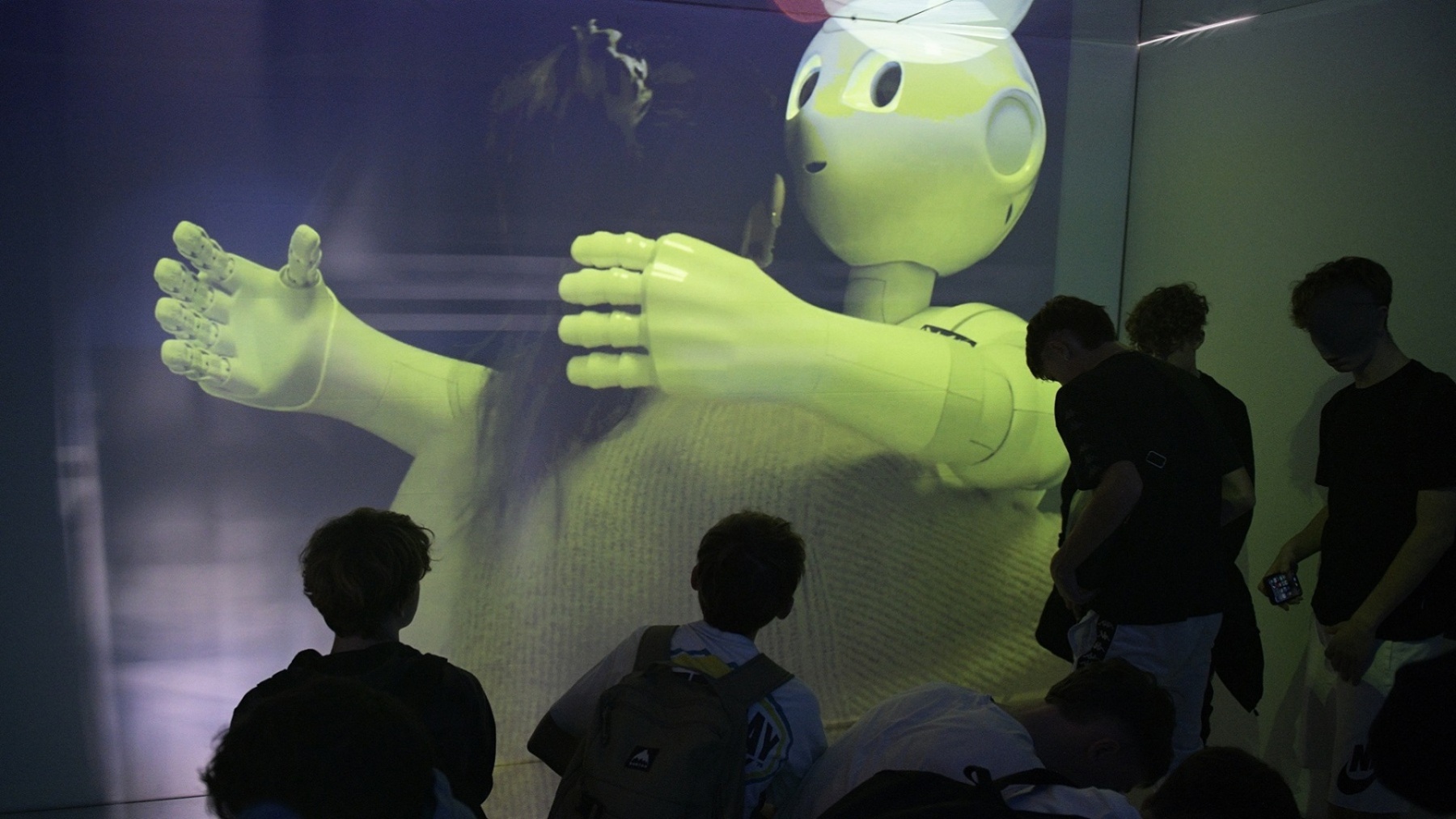
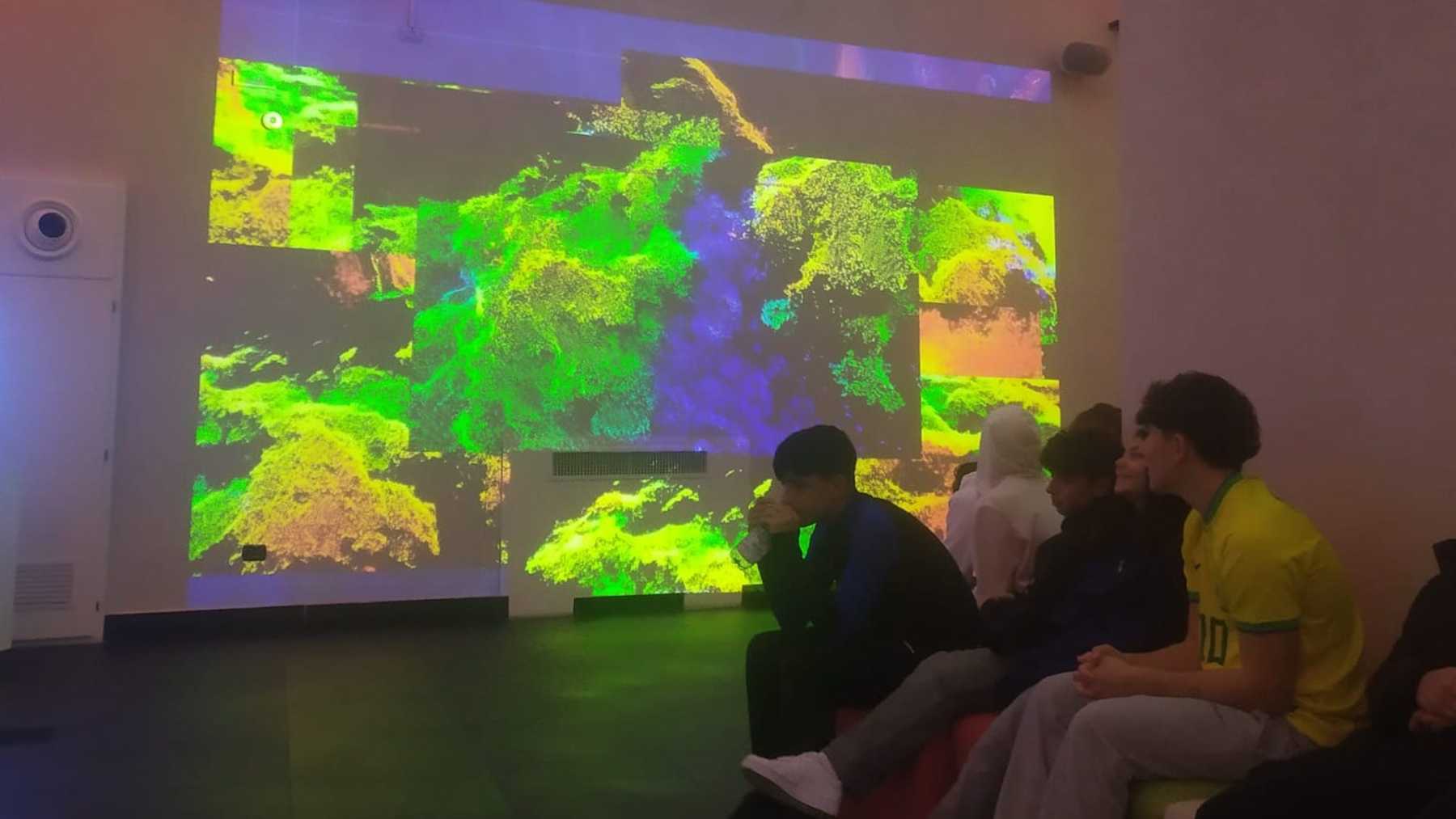
The immersive installation RAISE More than human
Author: Adriana Ferrari (ETT, Spoke 5)
Credits: RAISE


