


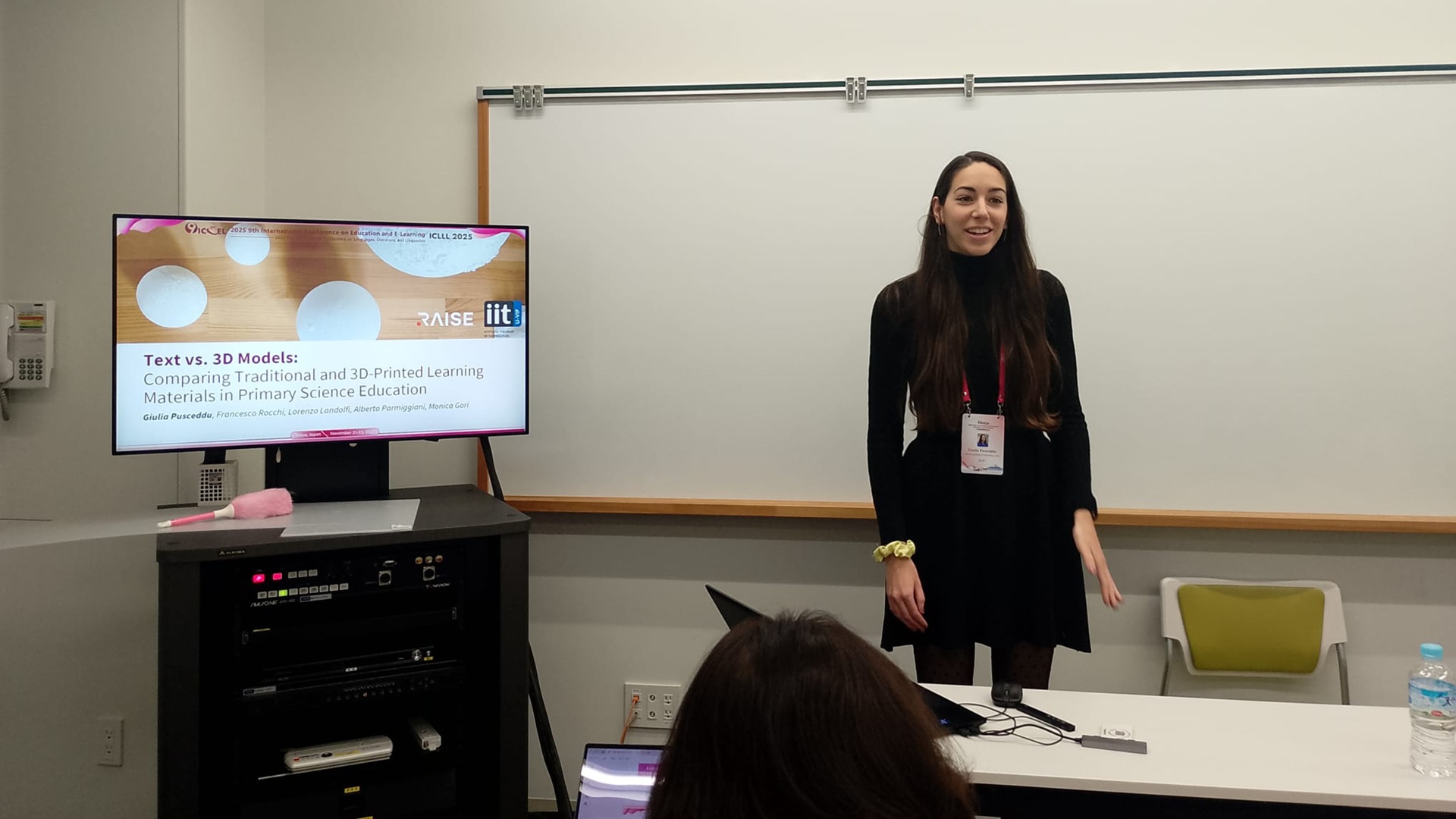
The International Conference on Education and E-Learning (ICEEL 2025) took place on 21, 22 and 23 November 2025 at Otsuma Women’s University in Tokyo and featured the participation of RAISE Spoke 1 with two research contributions dedicated to educational innovation.
The event brought together an international community of researchers and education experts to explore the theme “AI-Powered Learning: Transforming Education in the Digital Age”, offering three days of discussion on the opportunities opened by artificial intelligence and digital technologies in contemporary learning.
RAISE Spoke 1 was represented by Giulia Pusceddu and Lorenzo Landolfi from the Italian Institute of Technology, who presented the results of two studies developed within the programme. Their contributions highlighted the multidisciplinary approach of the spoke, focused on designing tools and methodologies that support more accessible, inclusive and effective education.
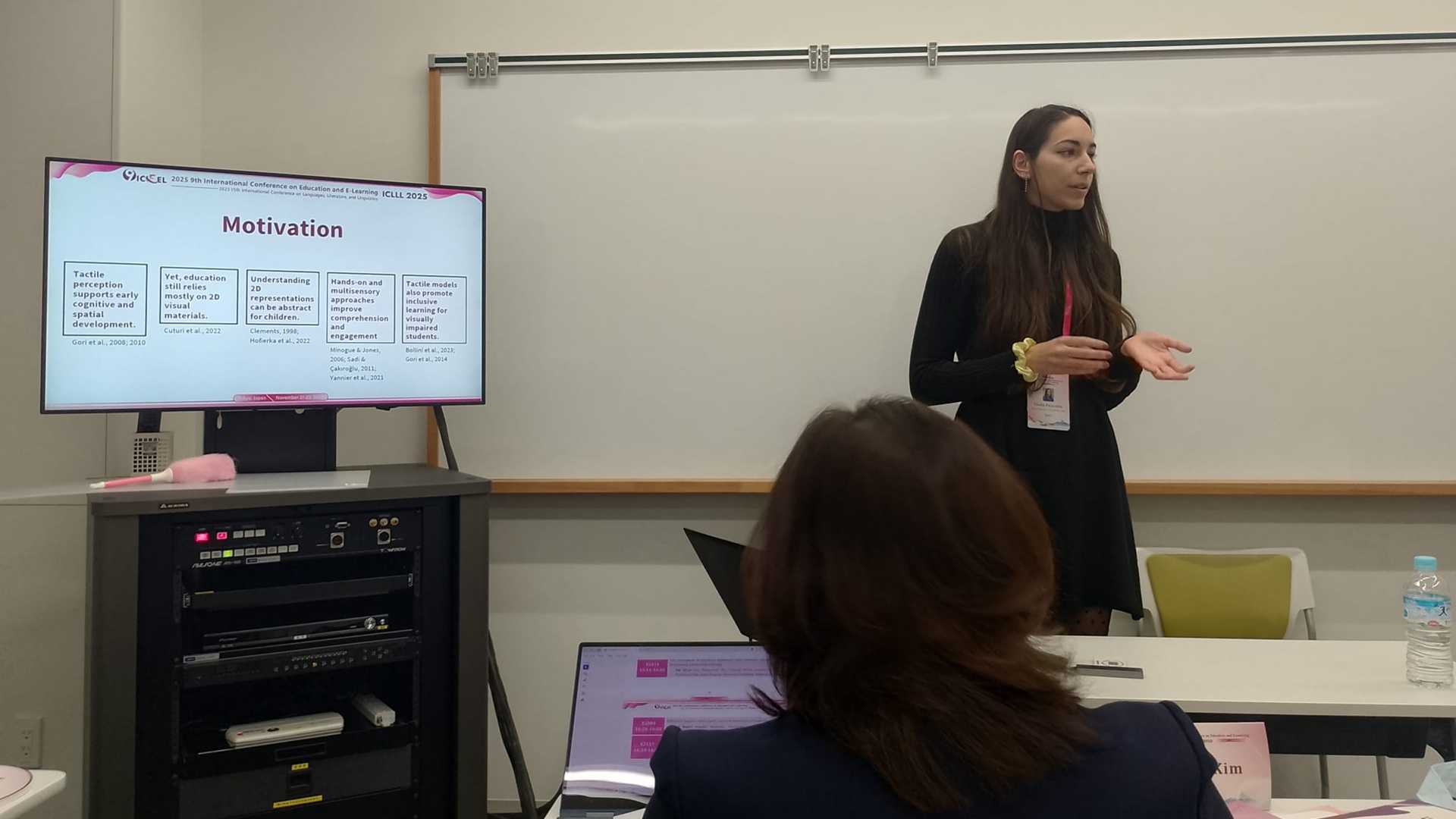
The first contribution, “Text vs. 3D Models: Comparing Traditional and 3D-Printed Learning Materials in Primary Science Education”, presented by Giulia Pusceddu, examined the use of 3D-printed models as support materials for science teaching in primary schools. The study compared traditional text-based resources with tangible objects created through 3D printing, with the aim of understanding how physical manipulation can strengthen spatial representation, promote active exploration of content and enhance the engagement of pupils. The work underscored the value of accessible and diversified learning tools that can support complementary learning styles.
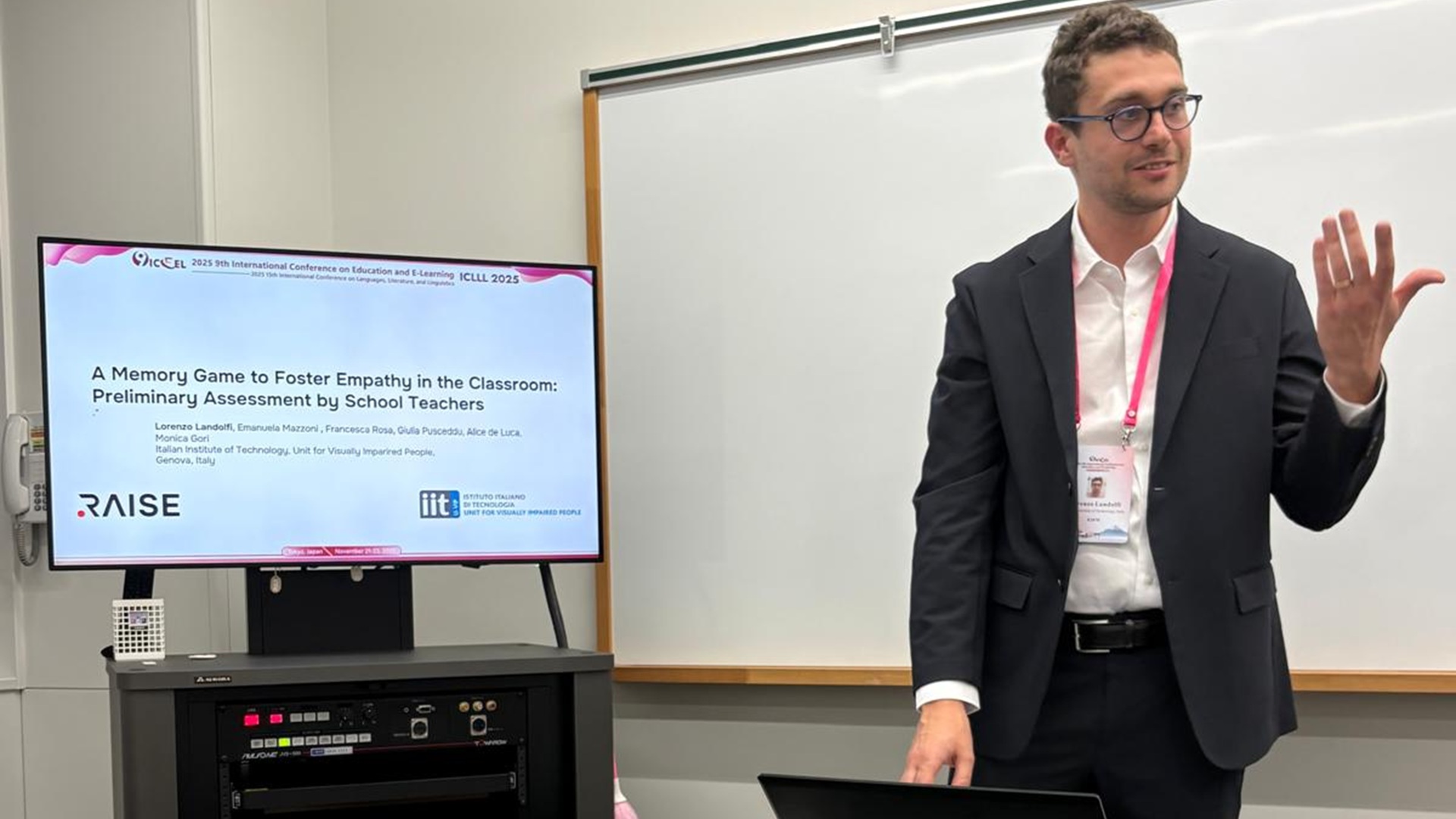
The second contribution, “A Memory Game to Foster Empathy in the Classroom: Preliminary Assessment by School Teachers”, presented by Lorenzo Landolfi, introduced an educational game designed to promote empathy and collaboration among primary school pupils. The research illustrated the structure of the game and collected feedback from teachers who tested it in real classroom settings. Their observations highlighted how well-designed playful activities can support participation, strengthen relational skills and contribute to socio-emotional development, fostering classroom environments based on cooperation and mutual respect.
Both articles have been accepted for publication in the conference proceedings, confirming the contribution of RAISE Spoke 1 to international research on technology-supported educational methods. The presence of the two researchers at ICEEL 2025 offered an opportunity to share results, engage with the global scientific community and reinforce the spoke’s role in developing accessible, reliable and inclusion-oriented solutions.
Participation in ICEEL 2025 also strengthened dialogue with academic and institutional partners committed to the digital transformation of education. The studies presented in Tokyo demonstrated how the integration of scientific research and educational practice can generate tools that support student well-being, enhance diverse competencies and improve the overall quality of the learning experience.


