ROSSINI project: aerial and quadruped robots for the identification and measurement of radioactive sources


The ROSSINI project (Remotely-operated On-board inSpections for SpecIal Nuclear material), developed within Spoke 4 of the RAISE project, aims to make the detection of undeclared radiogenic sources in maritime transport (particularly in shipping containers) more efficient and effective, reducing operator exposure and minimizing the impact on port operations.
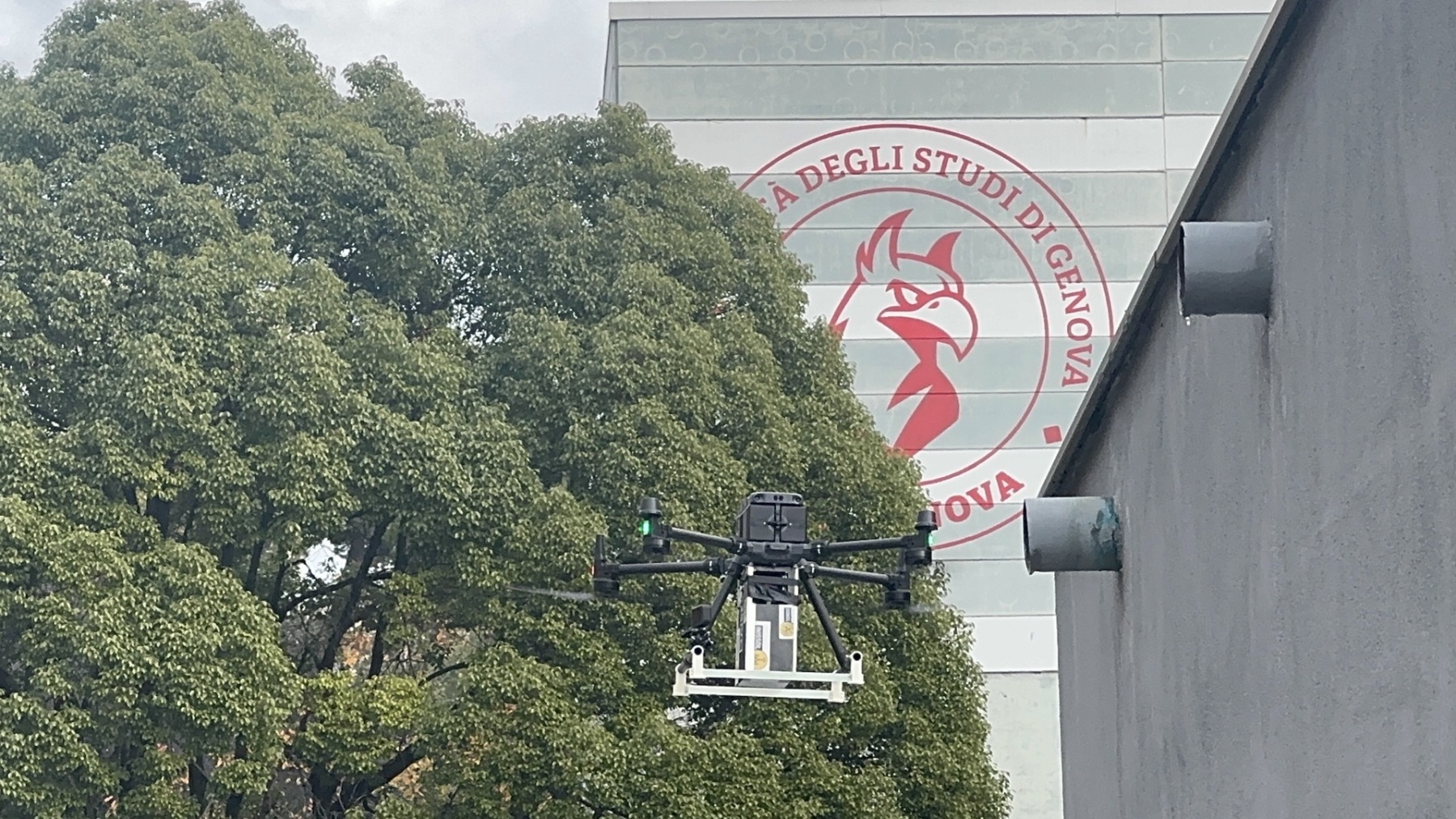
The proposed inspection approach is based on increasing “levels” of alert. It starts with a rapid, non-intrusive inspection of containers on board the vessel, proceeds to close-range measurements from outside the container using tele-operated robots, and concludes with the insertion of a detector inside the container. In the first phase, a drone performs an external scan while maintaining a safe distance. The objective is to identify any anomalies with respect to the environmental background and to discriminate the area or container that may be potentially suspicious. At this stage, GPS-based georeferencing is sufficient to associate the anomaly with a specific target within the container ship’s cargo.
If the outcome indicates a signal of interest, the process moves to the second phase: a close-range inspection carried out using one or more robotic devices, selected according to the scenario and operational constraints. The goal is to narrow down the area of origin of the signal and collect more informative measurements at shorter distances. To improve the accuracy of radioactive source localization, high-precision local positioning systems are employed, such as fixed reference points deployed in the area and/or sensors like LiDAR.
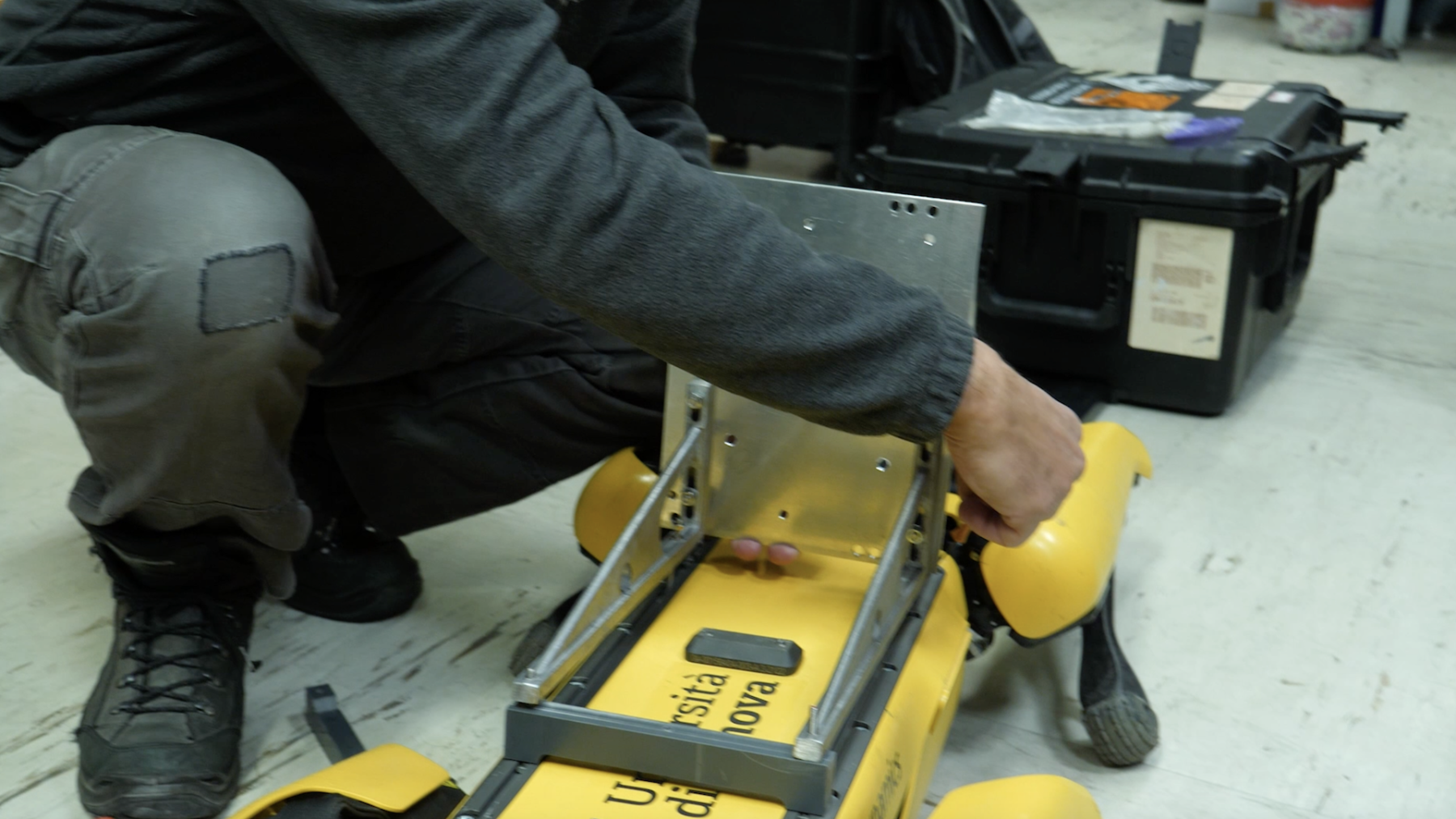
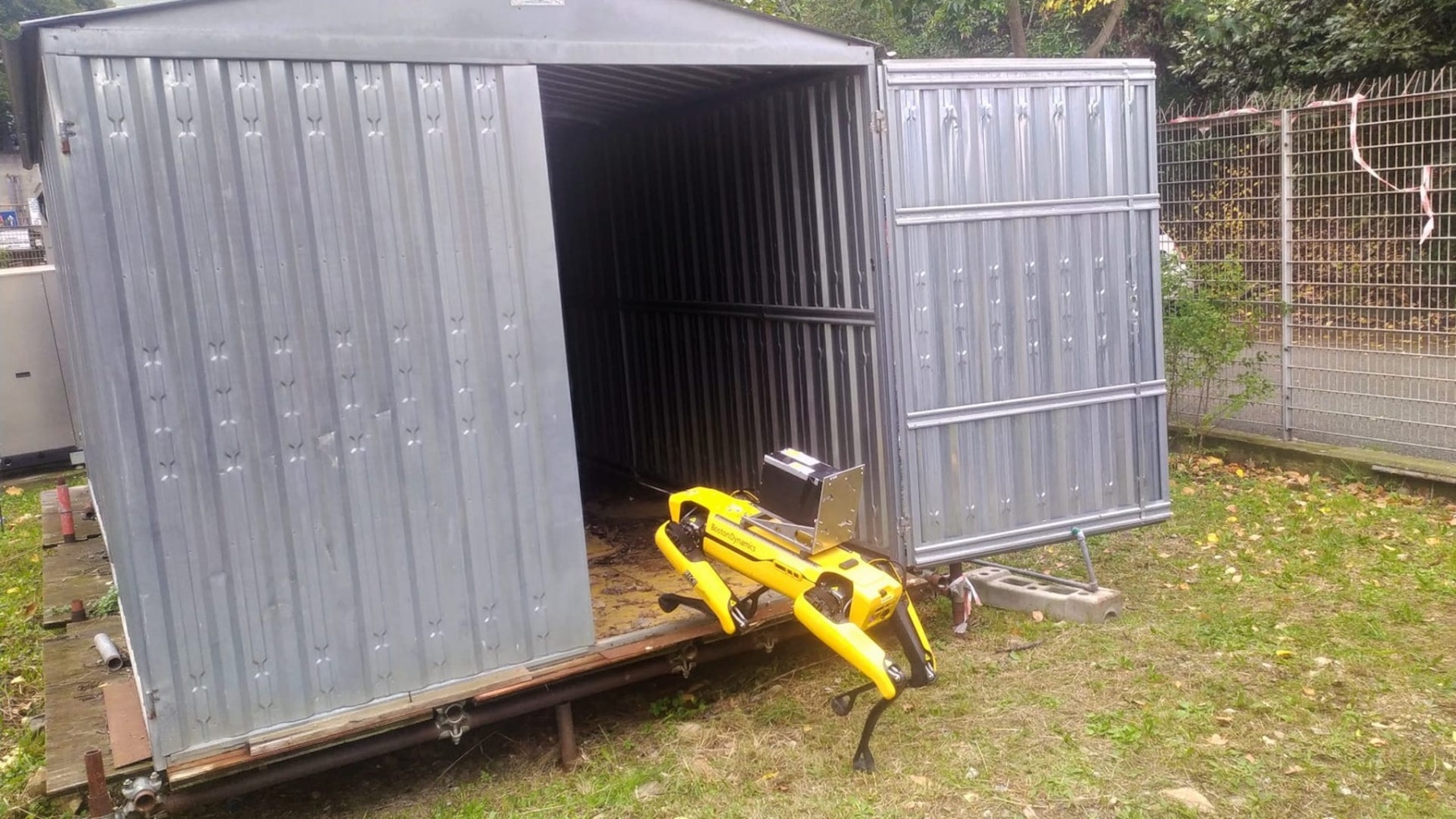
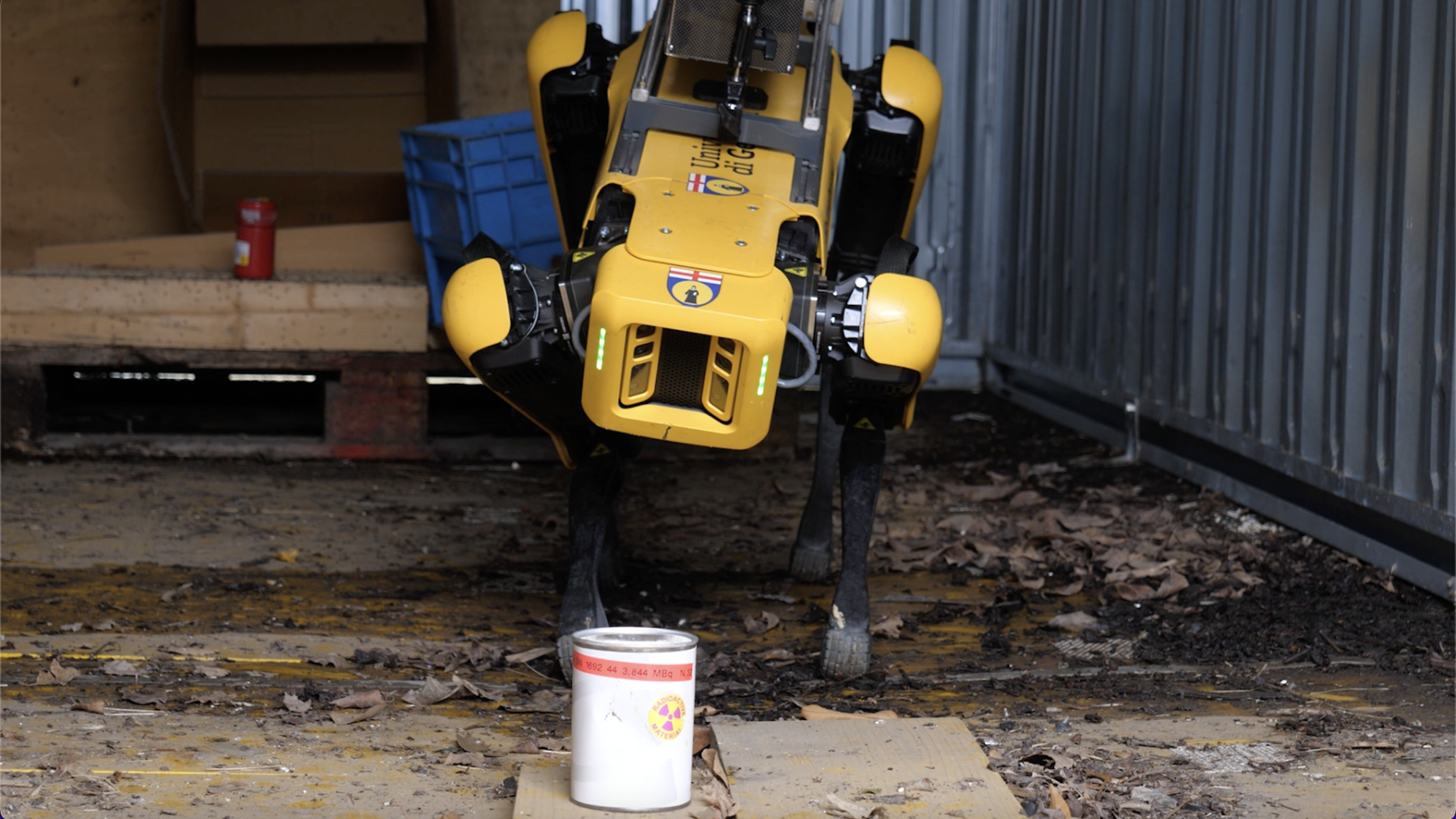
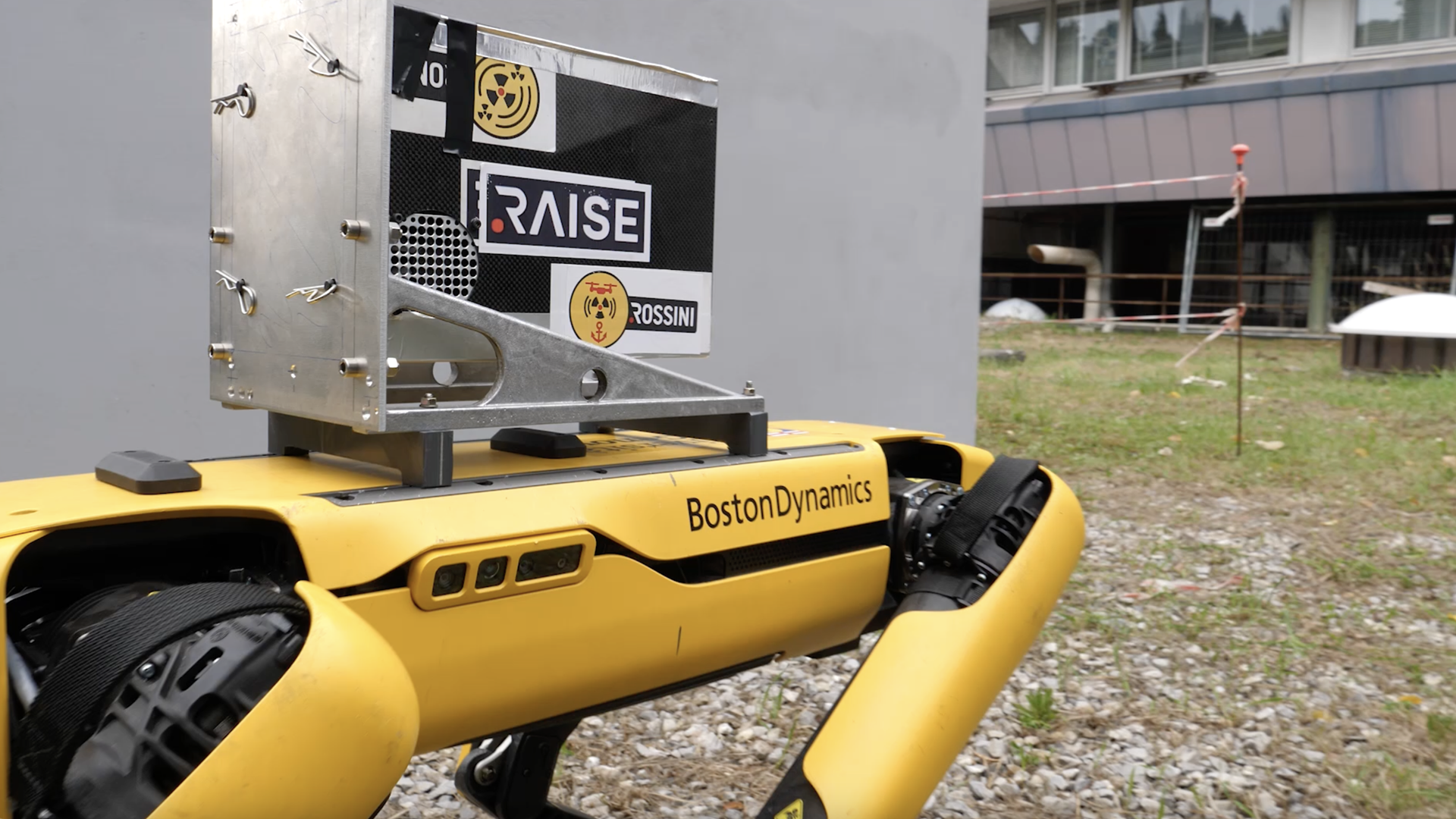
The third phase involves intervention inside the container, using a detector mounted on a zoomorphic robot (for example, the Spot robot dog by Boston Dynamics). The robot enters the container, precisely identifies the position of the source, evaluates its radiogenic activity, and collects the information required for subsequent safe removal, while keeping human personnel at a safe distance. The radiation data collected during the three phases are processed with the support of AI algorithms to provide timely and detailed indications of the possible presence and hazardousness of the radiogenic source and to guide the inspection process. Advanced analysis tools help make the interpretation of measurements faster and more robust, even in the presence of shielding or complex geometries, with the aim of transforming radiometric inspection into a faster, repeatable process that can be integrated into port operational workflows.
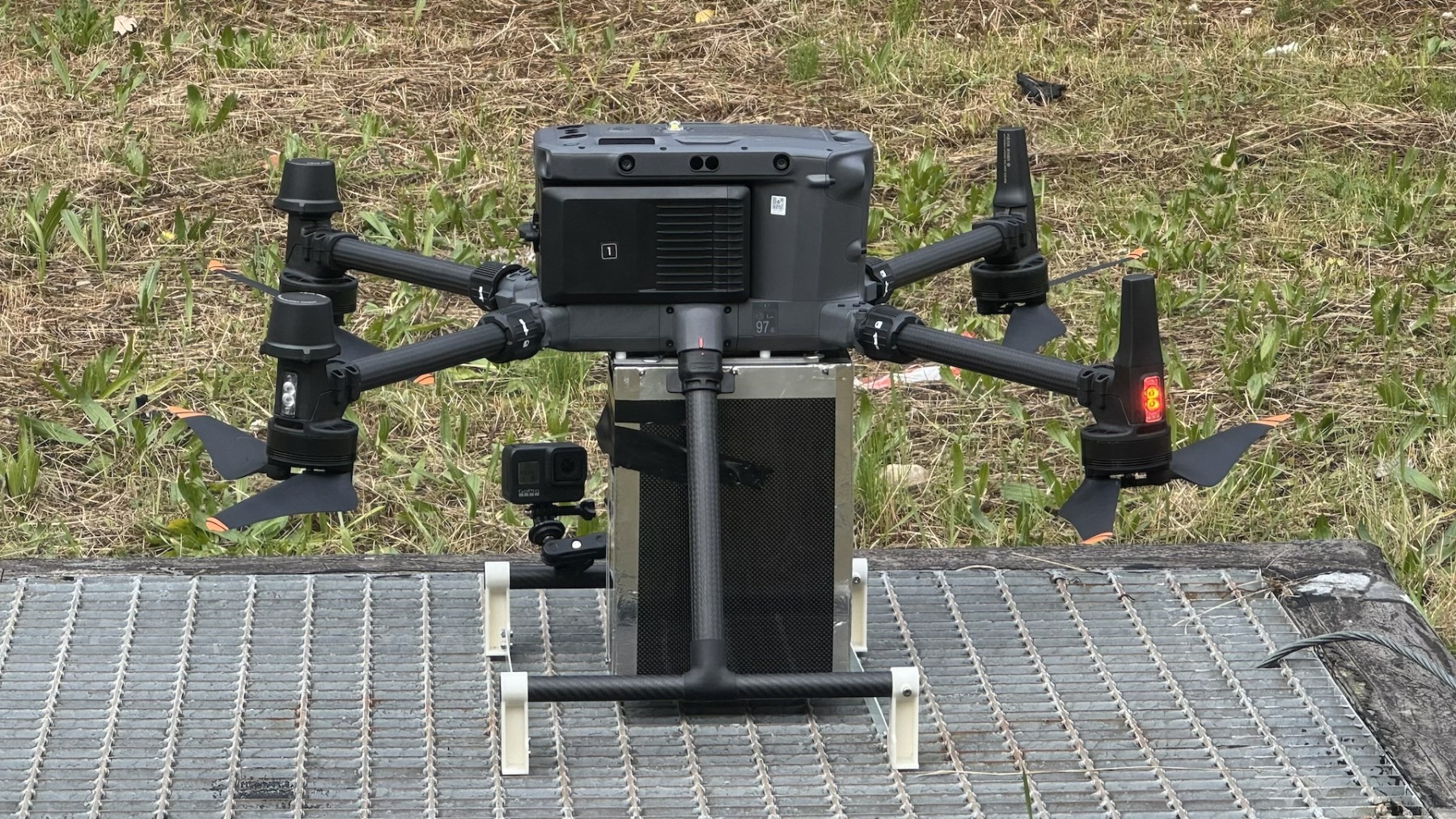
The measurement system developed within the ROSSINI project by INFN Genoa is based on a compact and lightweight detector consisting of a cesium iodide scintillation crystal (CsI(Tl)) coupled to a Silicon Photomultiplier (SiPM) and surrounded by a plastic scintillator for the rejection of the cosmogenic radiation background. The RONDÓ detector (ROssini Nuclear raDiation mOnitor) has been designed to be carried by aerial platforms or mounted on ground robots (such as AlterEgo-IIT, an IIT robotic arm, or a robot dog). The detector has been tested and validated under conditions similar to those expected during container inspections in port environments.
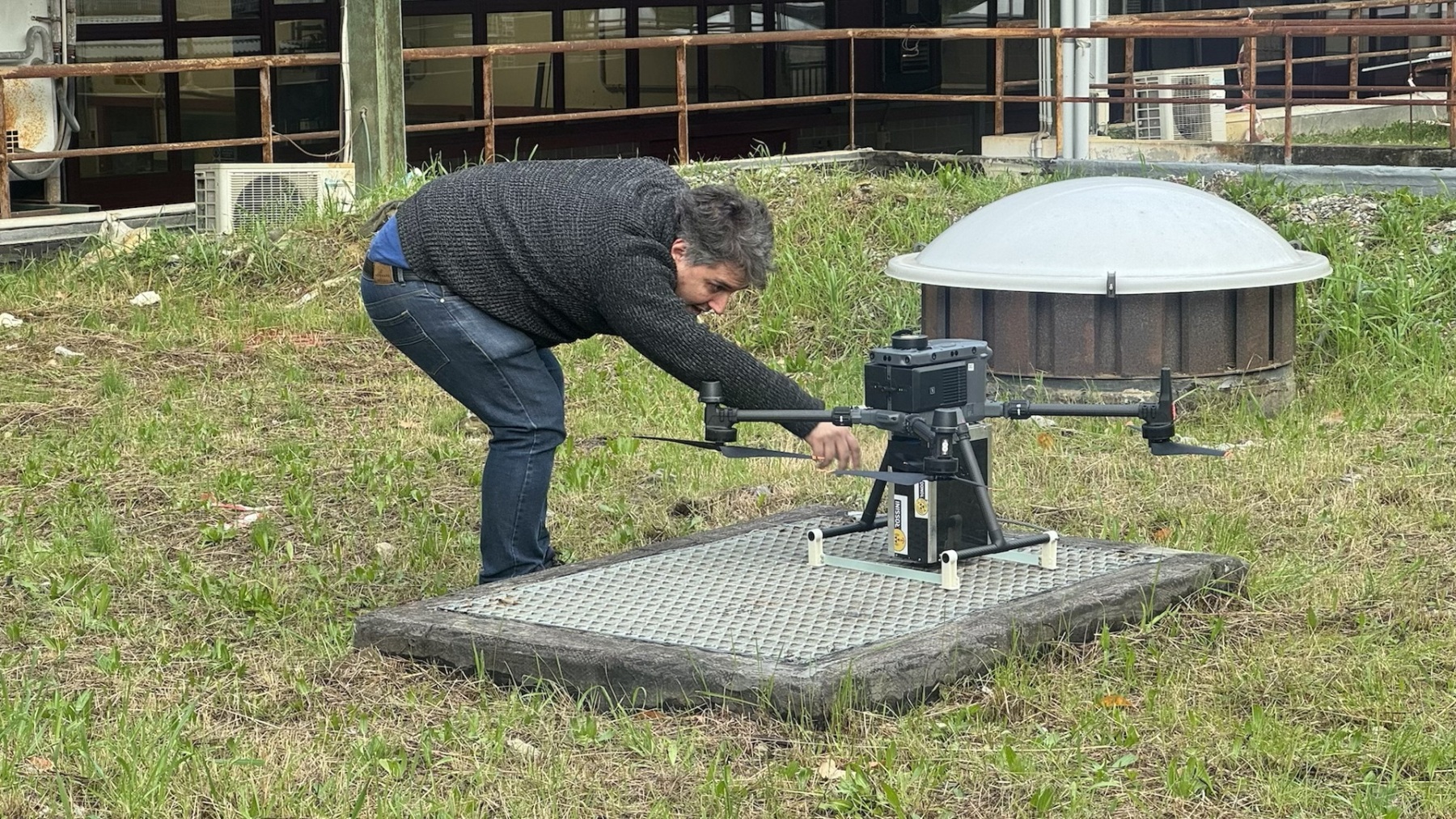
During tests conducted at the INFN Genoa laboratories, a sealed radioactive source was placed in an environment comparable to a container (a van and a metal shed), while the detector was transported by aerial drones and ground robots.
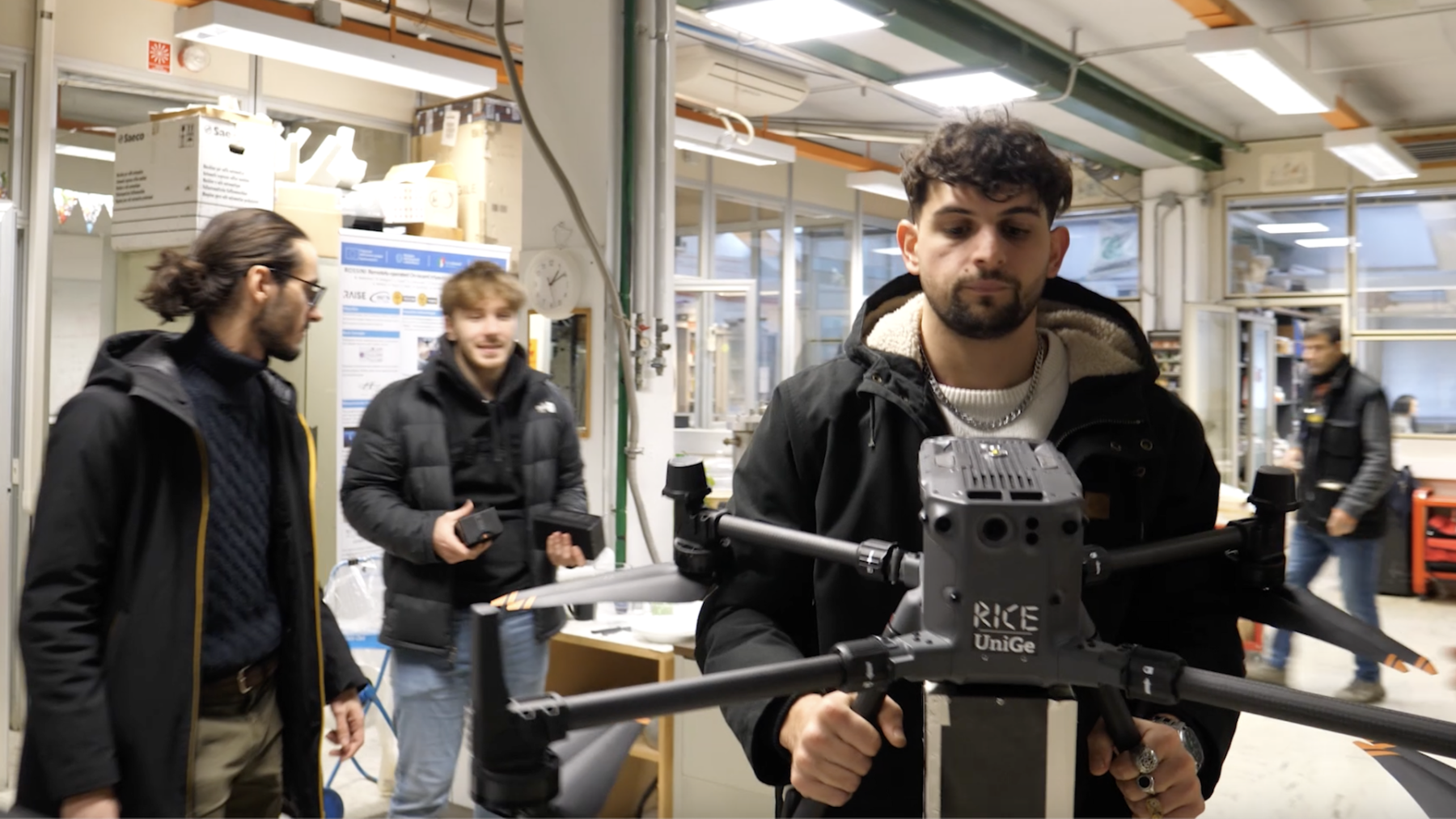
The aerial drones and quadrupedal robot are provided by the RICE laboratory at the University of Genoa, while AlterEgo is provided by IIT.
The excellent results obtained in these tests validated the proposed inspection procedure. In conclusion, the ROSSINI project demonstrates how the integration of robotics, drones, and artificial intelligence can provide concrete solutions to complex security challenges in real-world contexts such as ports.