Technology and creativity came together at MAXXI with RAISE Beyond


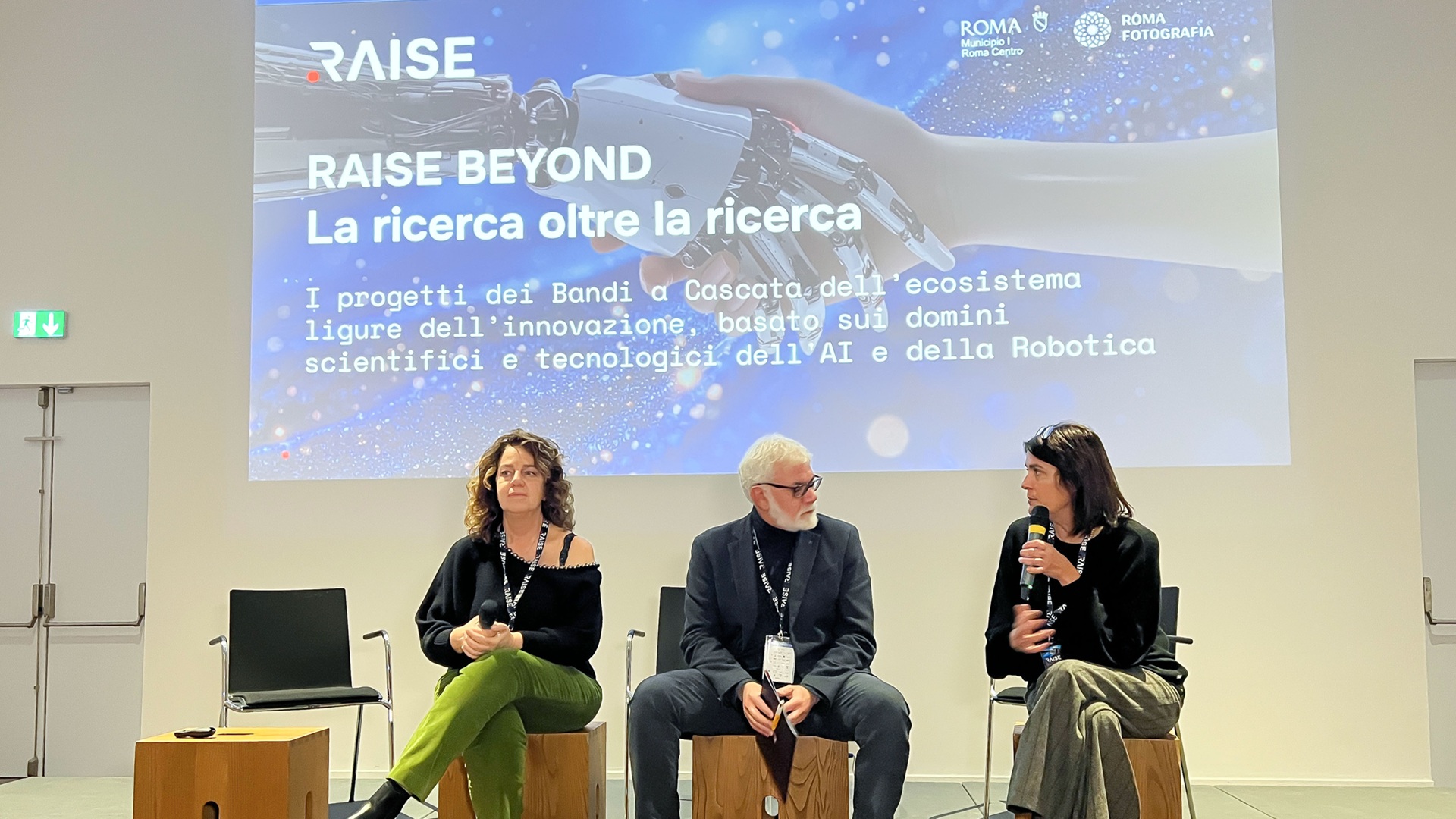
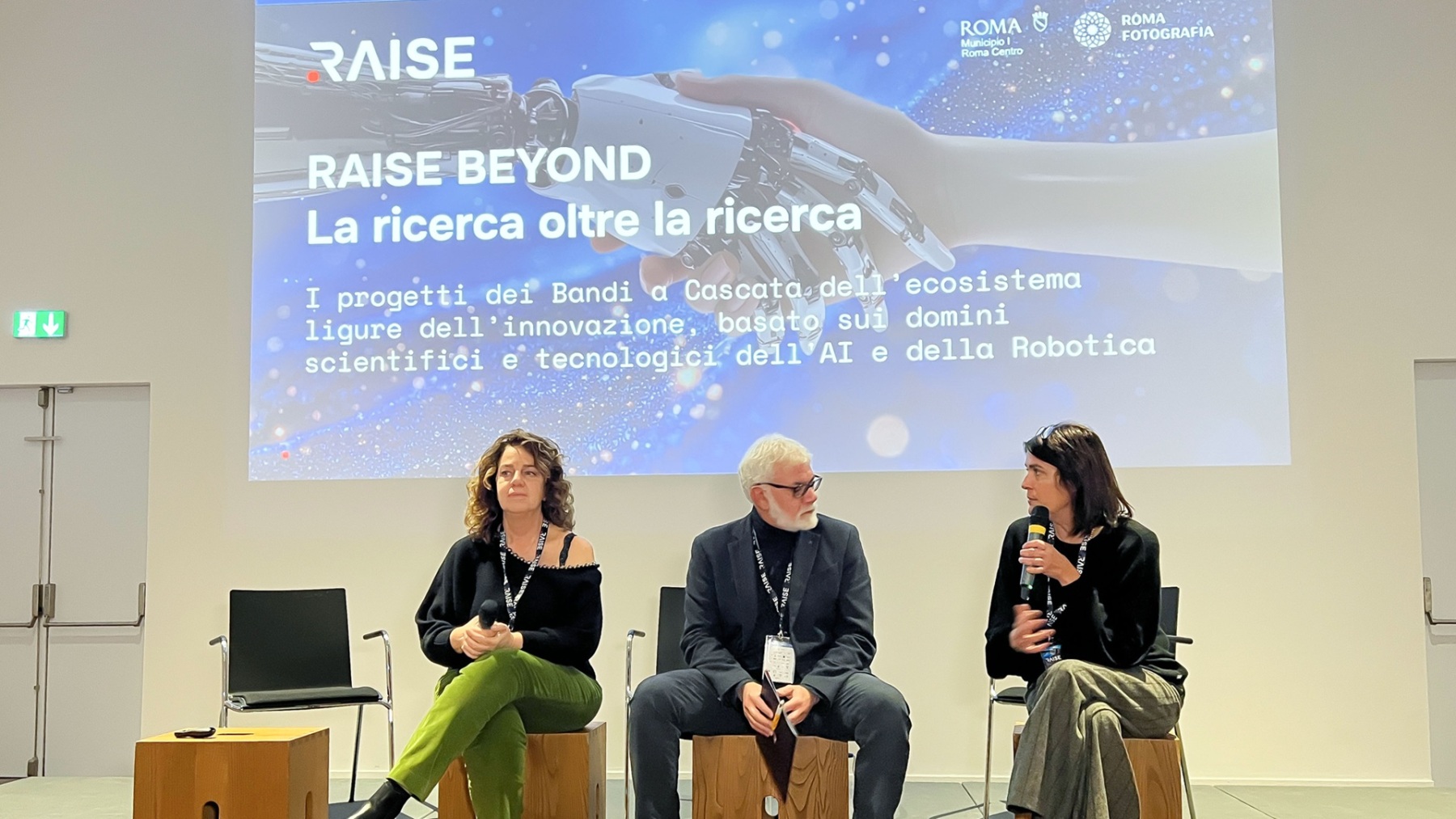
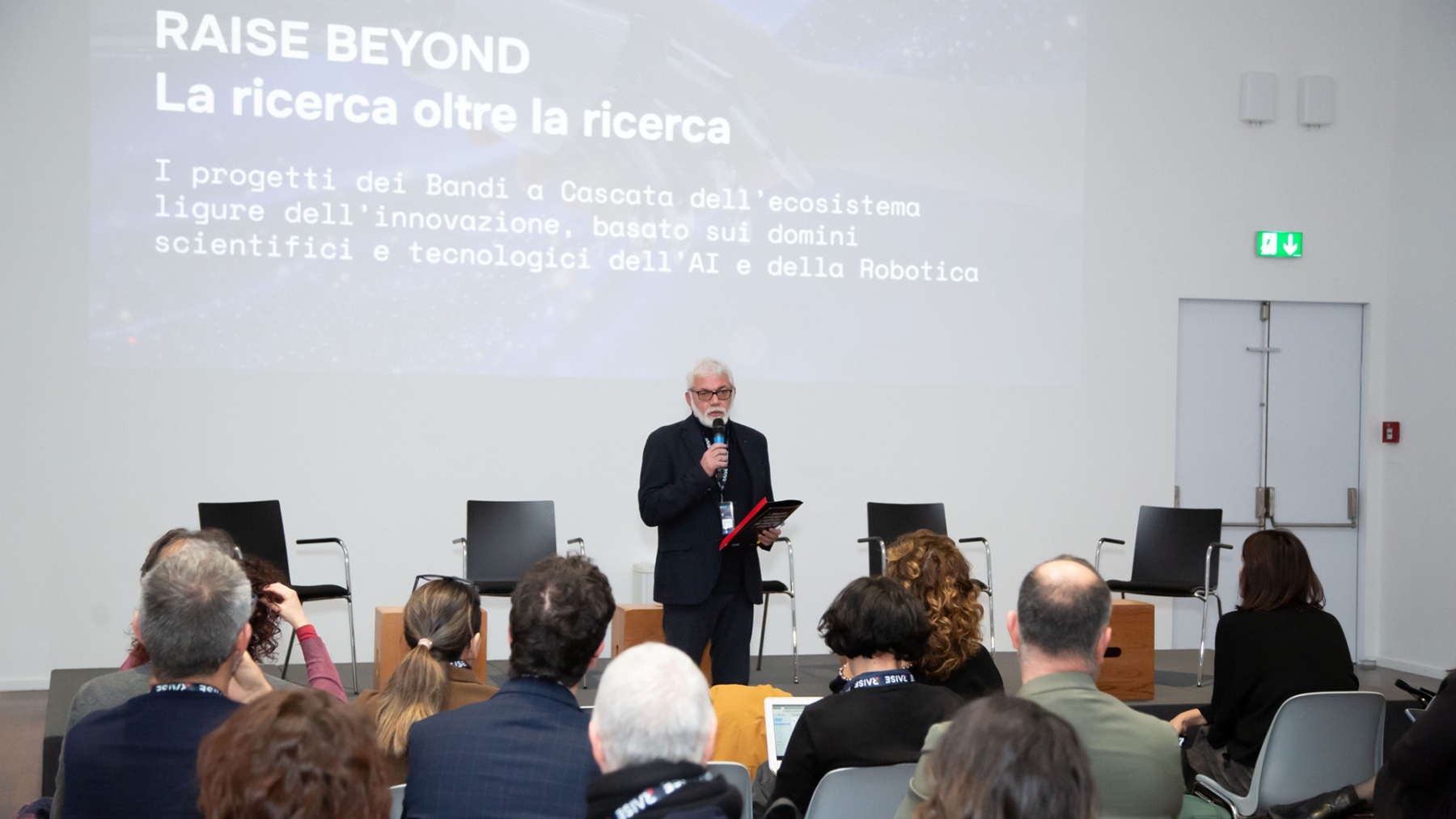
As part of the Roma Fotografia festival, co-designed with Municipio I Roma Centro, RAISE brought to MAXXI – the National Museum of 21st Century Arts – a day dedicated to technological creativity and shared vision, involving researchers, enterprises and institutions. The initiative RAISE Beyond – Research Beyond Research highlighted the experience of RAISE’s Cascade Funding calls.
The Cascade Funding calls offered a strategic tool that enabled RAISE to support entrepreneurial organisations and research groups through targeted micro-financing. This approach fostered the development of innovative projects in Liguria and across other Italian regions, extending the impact of the ecosystem and encouraging national collaborations capable of generating experimentation, prototypes and concrete applications. MAXXI thus hosted a rich overview of the ideas emerging from this expanding network.
In the Carlo Scarpa Hall, visitors and stakeholders met startups, SMEs, universities and research centres working across the four areas that shape RAISE’s programmes: culture, art and inclusion; healthcare and intelligent technologies; ecorobotics and environmental monitoring; smart and sustainable ports.
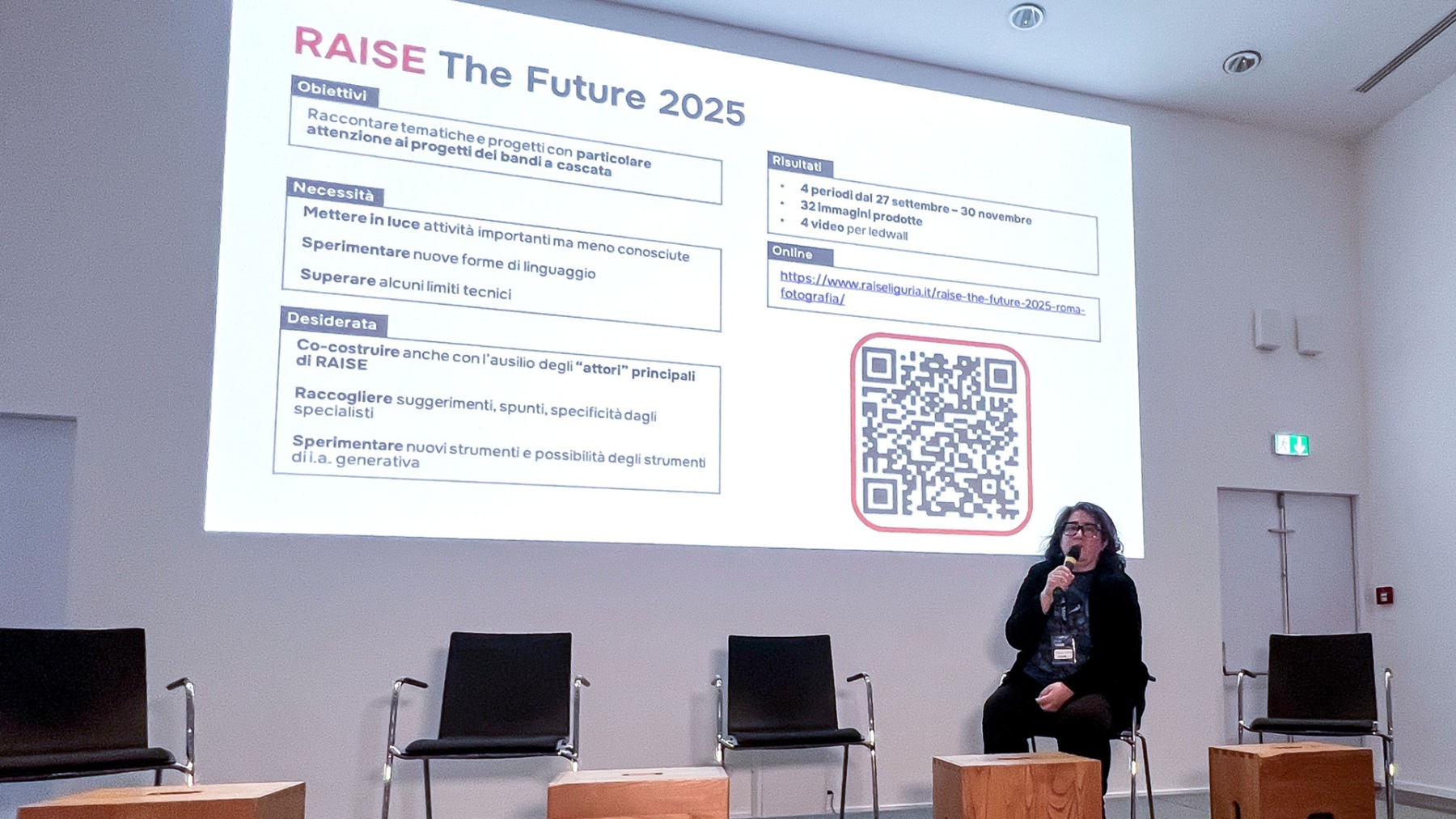
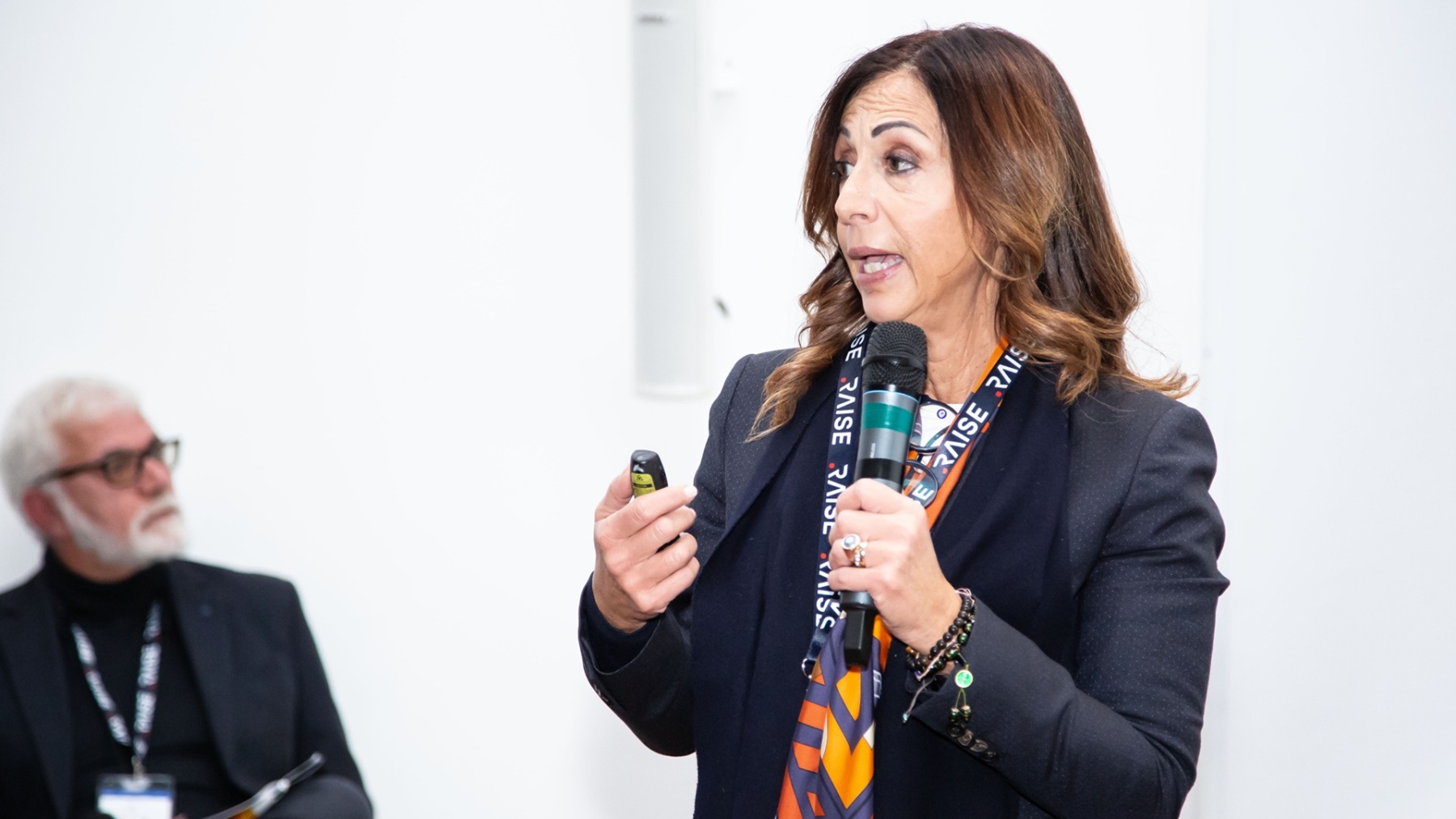
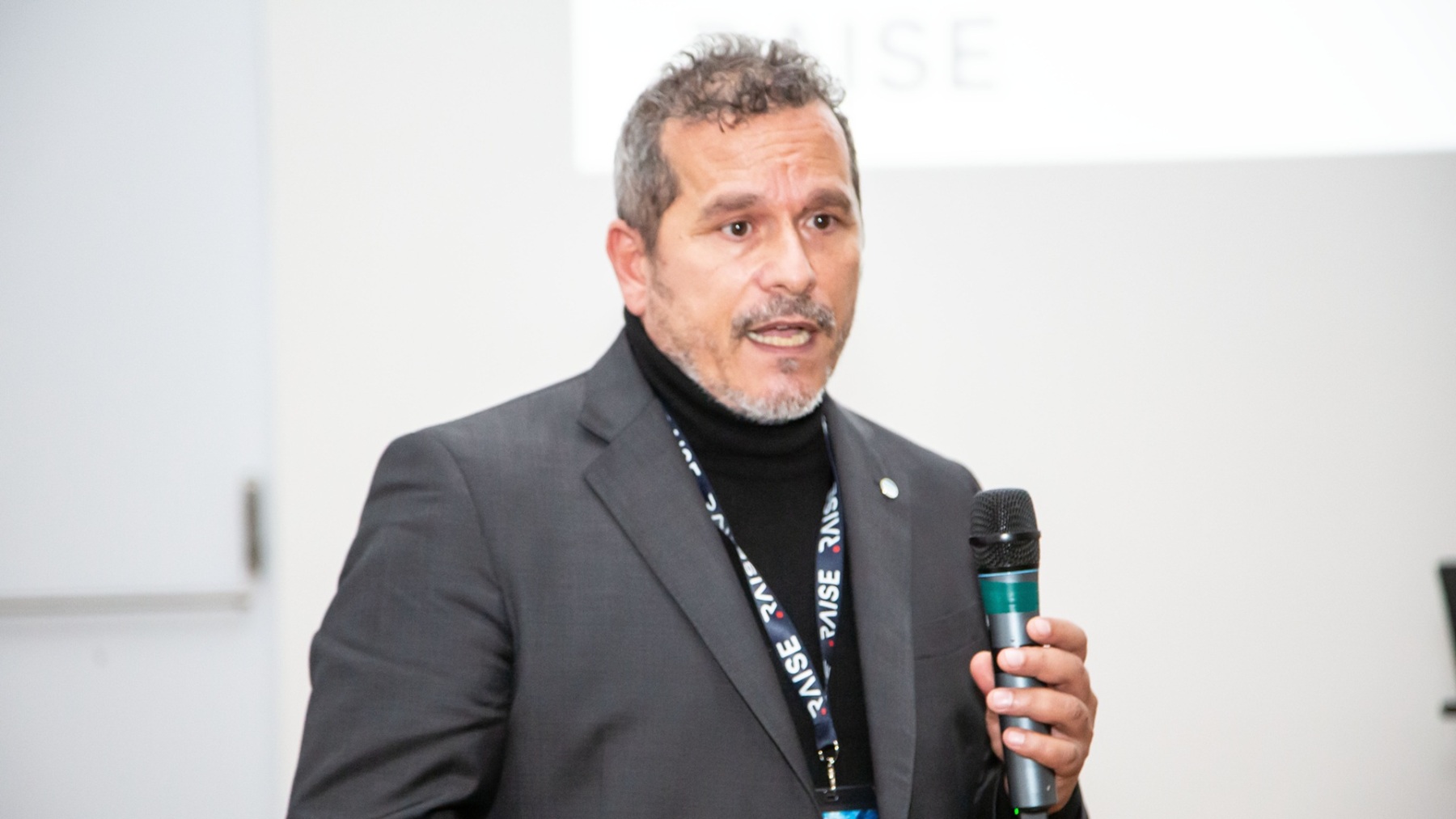
The day opened with contributions from Cristina Battaglia, Programme Manager of RAISE, and Maria Cristina Valeri of Roma Fotografia, who illustrated the ecosystem’s vision and the value of connecting technological innovation with visual languages. The audience was then introduced to RAISE the Future, an exhibition project developed for Roma Fotografia 2024 and 2025.
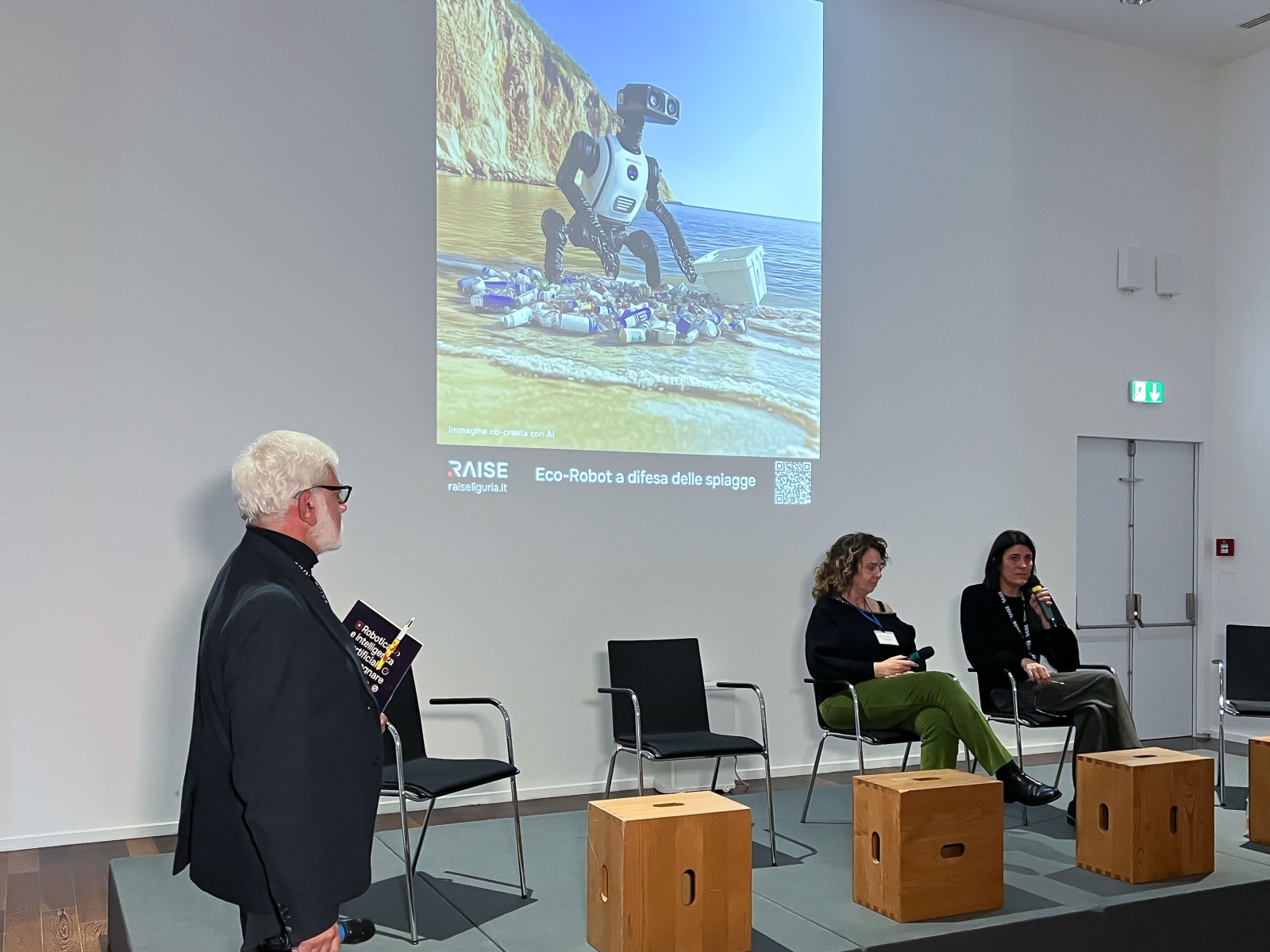
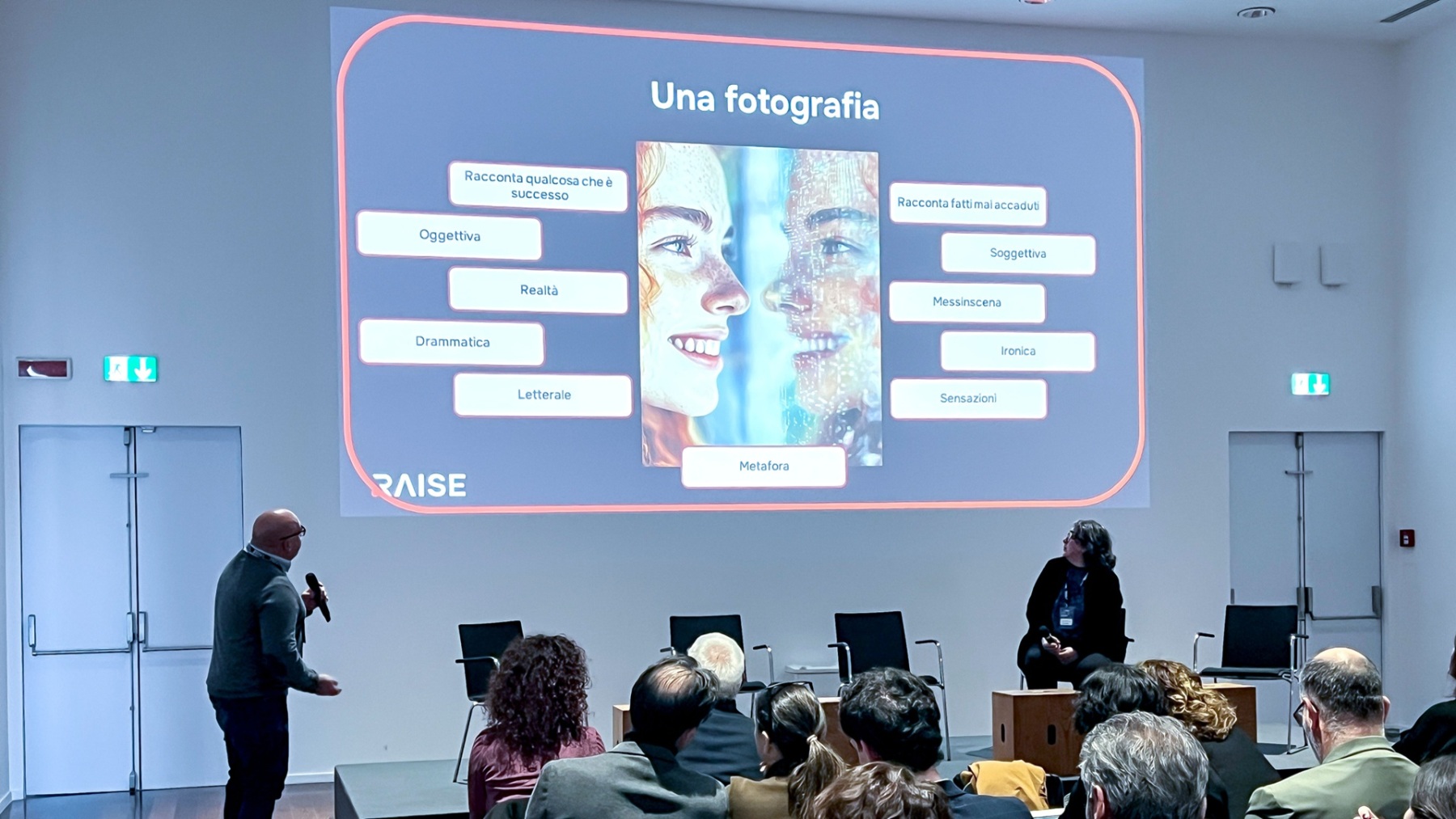
The initiative interprets RAISE’s identity through images co-created with artificial intelligence, a narrative experiment involving researchers and advanced generative systems. Giovanni Paolo Caruso and Patrizia Schettino (CNR) guided attendees through the exhibition and its aesthetic and conceptual horizons.
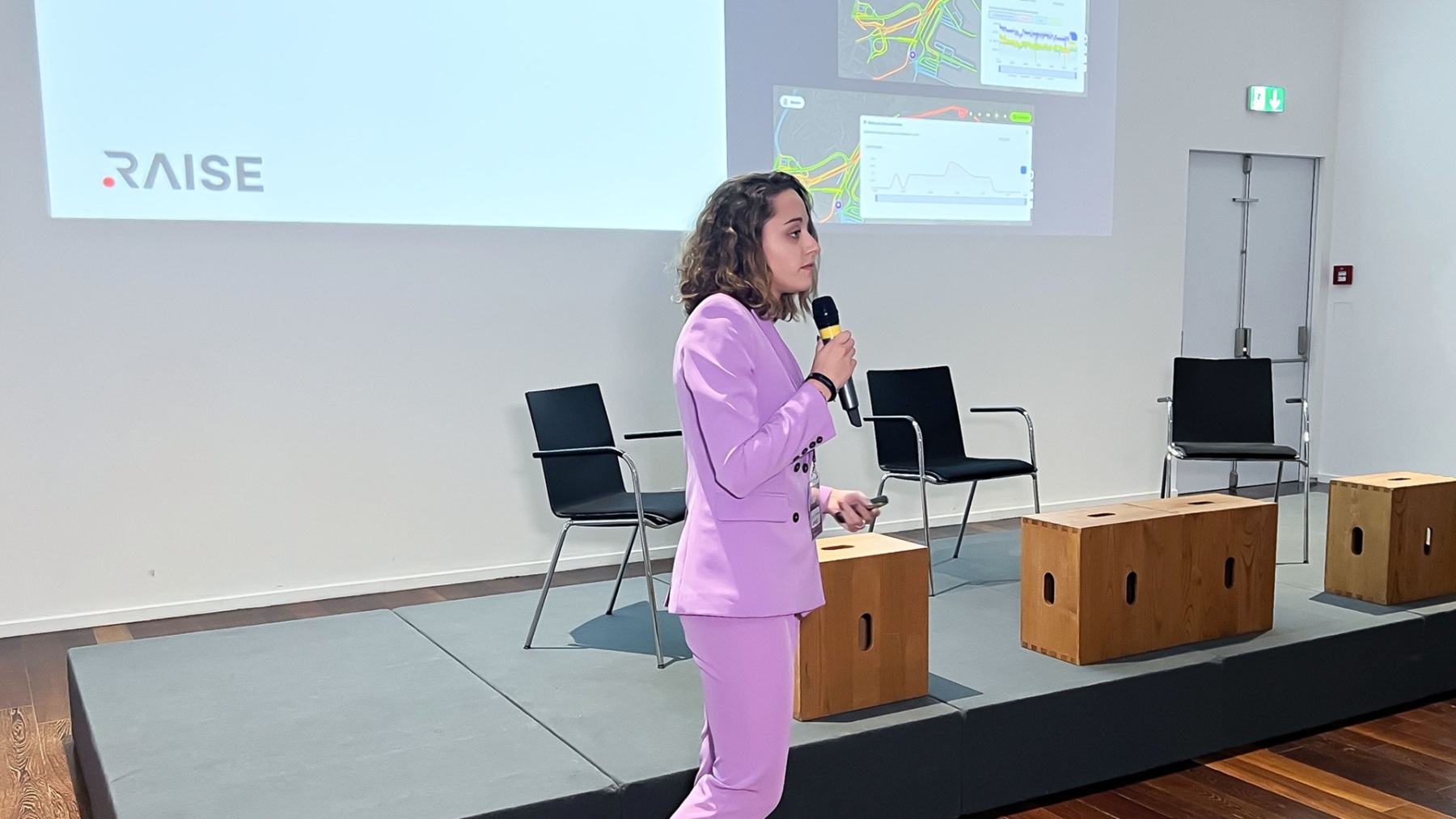
The section dedicated to the Cascade Funding calls showcased a broad range of applications developed during the programme. In the field of culture, art and inclusion, Antonella Poce (University of Rome Tor Vergata) presented ARTISTIC, a project introducing new forms of heritage education based on robotics, AI and inclusive methodologies. The initiative proposed tools designed to engage diverse audiences and broaden access to cultural heritage.
Next, Tania Di Mascio, Fabio Franchi, and Sara Peretti from the University of L’Aquila, together with Maria Cristina De Amicis and Alessio Gabriele from the “A. Casella” Conservatory, presented ARTECOM, a project focused on creating digital installations that enhance the experience of urban heritage. The initiative demonstrated the value of interdisciplinary collaboration among technology, music and the visual arts.
In the healthcare and intelligent technologies segment, Carmine Dodaro (University of Calabria) illustrated GOLD, a platform introducing declarative AI, digital twins and advanced data analytics to optimise hospital resource management. The project offered innovative operational models to support complex processes and improve hospital organisation.
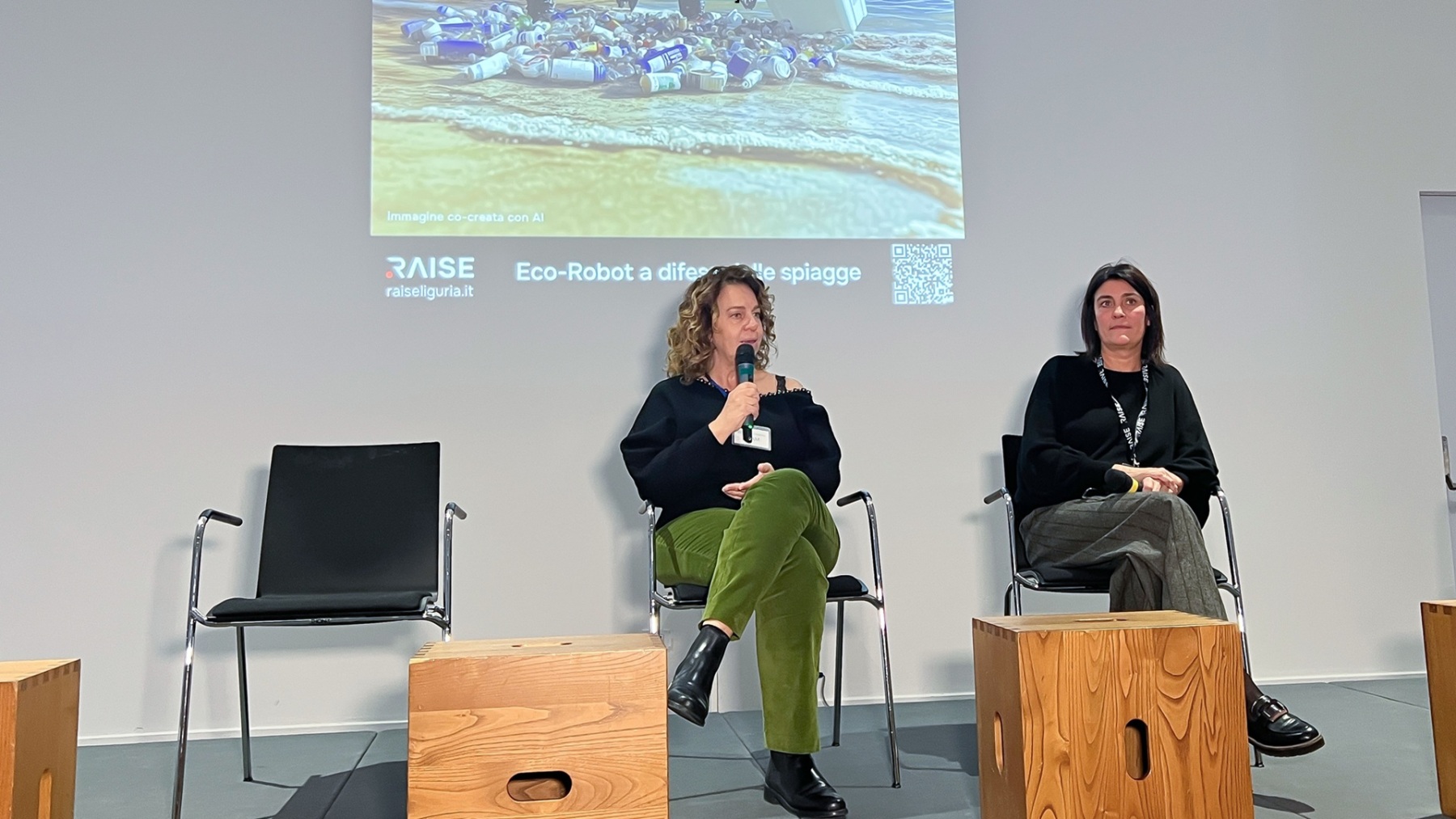
The ecorobotics and environmental monitoring area provided an in-depth look at solutions designed for ecosystem protection. Giorgio Budillon (University of Naples Parthenope) presented IAMM, an integrated system for marine monitoring developed with the University of Salento. The platform combines sensing technologies, adaptive models and field observations to analyse coastal dynamics.
Afterwards, Michele Boella, CEO & Founder of NeMeA, presented EcoMonitoring+, an initiative introducing advanced tools for coastal and lake monitoring through the collaboration of NeMeA Sistemi, Hedya and Aisma. The project offered new possibilities in environmental analysis through modular technologies and integrated observation systems.
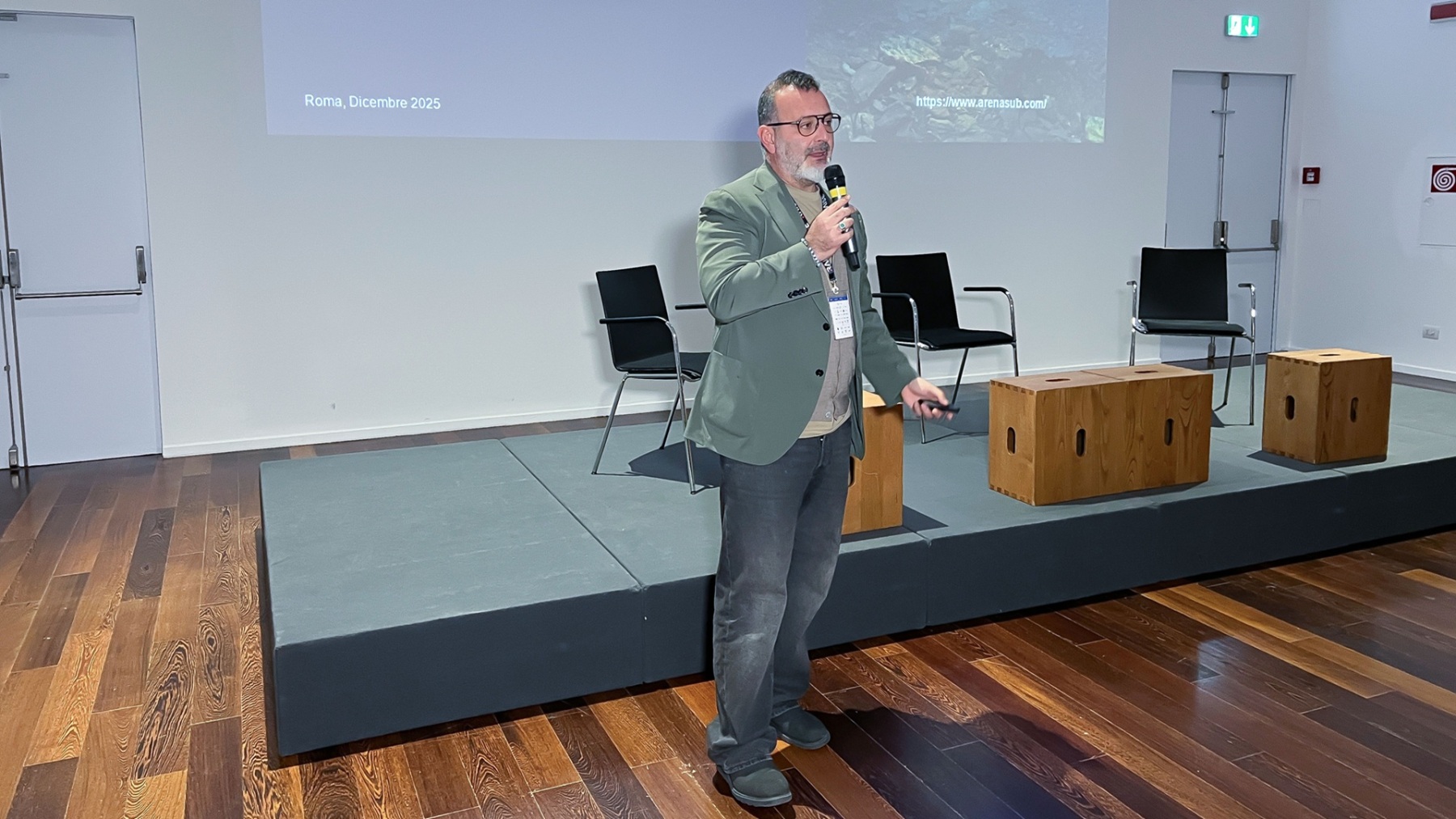
The environmental section concluded with Cosimo Palmisano (Wsense), who presented WMISSION, a technology that coordinates networks of underwater robots through wireless communication systems. Developed with Arena Sub, the project opened new perspectives for scientific and industrial operations in complex marine environments.
The programme concluded with a focus on smart and sustainable ports. Francesco Rebora and Ginevra Roggero (Exis) presented Be-Twin, a platform for real-time port digital twins developed in collaboration with Spindox, Swhard, T&G Technology & Groupware and On Air. The initiative showed how artificial intelligence can support urban planning, mobility and the management of coastal infrastructure.
The event offered a valuable opportunity to explore innovation emerging at the intersection of scientific research, industrial applications and creativity. Each project presented a different way of interpreting technology and turning it into a tool capable of generating value for people, territories and communities.